How Long Should a Piano Lesson Be for a Child? 30, 45, or 60 Minutes?
For many young beginners, 30 minutes works well for a private lesson. A 45-minute lesson can fit children who are ready for more material, while 60 minutes may make sense for older students or for a well-structured group class. The best choice is not the longest lesson. It is the format that keeps your child engaged, gives the teacher time to teach, and leaves your child willing to come back.
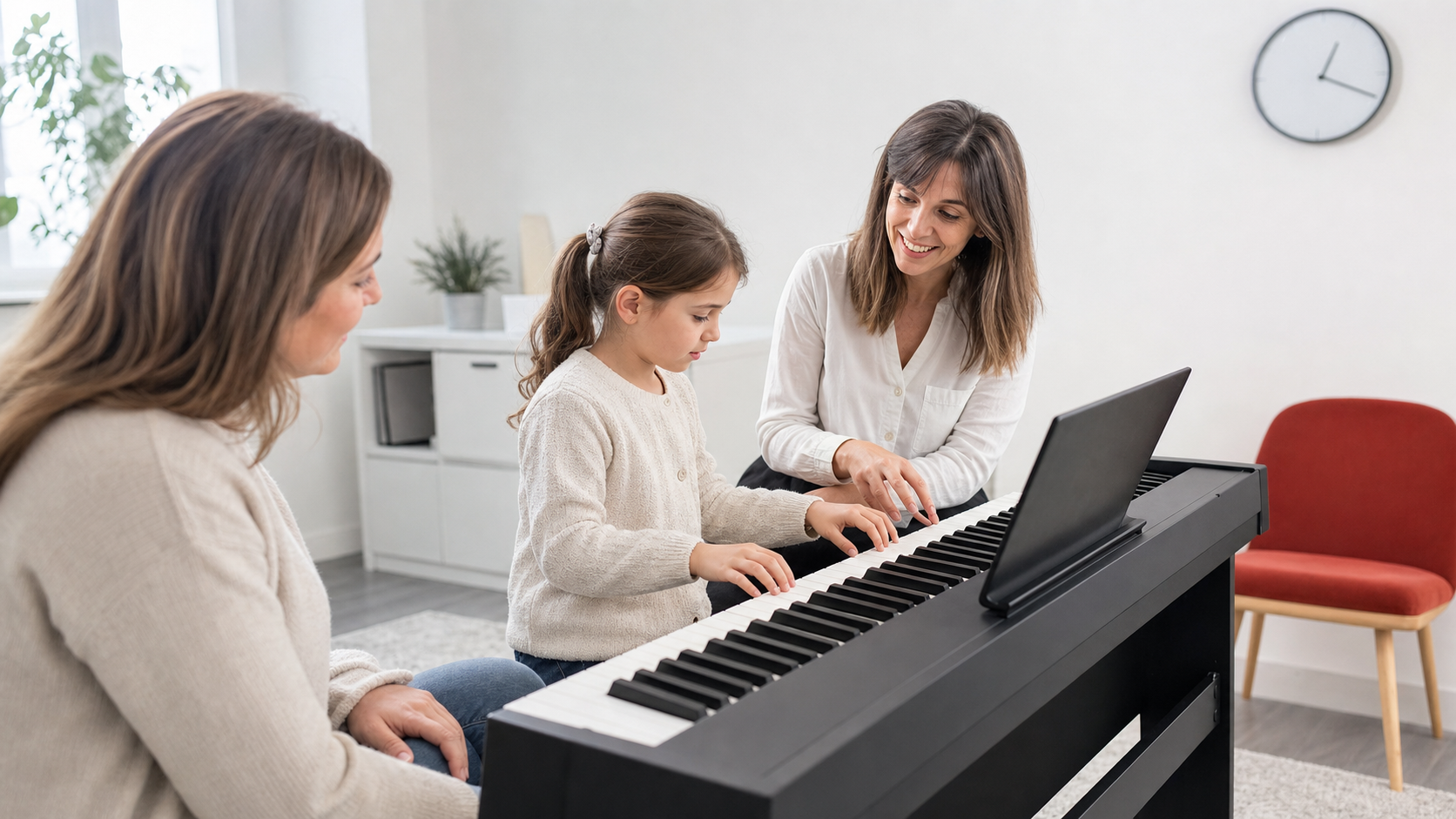
Parents often compare piano lessons by minutes: Is 30 minutes enough? Would 45 minutes help my child progress faster? Does a one-hour class ask too much of a beginner?
Those are useful questions, but the clock is only one part of the decision. A focused 30-minute private lesson can be more productive than an unstructured hour. A lively one-hour group class can work well because children are not necessarily doing one task for 60 straight minutes. Age, attention, lesson format, current skill level, and the amount of material all matter.
Quick answer: which piano lesson length fits most children?
| Lesson length | Often fits | Watch for |
|---|---|---|
| 30 minutes | Young beginners, first private lessons, children building focus | The lesson feels rushed or important questions keep getting postponed |
| 45 minutes | Beginners ready for more variety, older children, students with several goals | Energy drops well before the lesson ends |
| 60 minutes | Structured group classes, older or more experienced students, broader lesson plans | Too much sitting, too little variety, or frustration late in the session |
This is a starting point, not a rule. A teacher who knows your child can tell you more than an age chart can.
When a 30-minute piano lesson is enough
Thirty minutes can be a strong choice for a young beginner taking a private lesson. It gives the teacher time to review a song, introduce one or two ideas, correct a small problem, and set a clear home goal. Because the session has a firm endpoint, the teacher also has to prioritize what matters most.
A shorter lesson may fit especially well when your child:
- is new to one-on-one instruction;
- learns best through short, specific tasks;
- can focus well for part of a lesson but fades when too much is introduced;
- needs a calm first experience more than a large amount of material; or
- has a simple practice plan and online support between lessons.
Thirty minutes is probably too short when the teacher repeatedly has to choose between reviewing last week's work and teaching the next skill. If every lesson ends in the middle of an important explanation, a longer session may help.
When 45 minutes gives a child useful breathing room
A 45-minute lesson adds time without immediately doubling the demands of a short session. That extra space can let a teacher balance several kinds of learning: songs, rhythm, note reading, technique, creative play, questions, and a review of what to practice next.
Forty-five minutes may be a good next step when your child stays engaged through 30 minutes and still has more to ask or learn. It can also help when the music has become more detailed or when two goals need regular attention—for example, learning a song while also building note-reading confidence.
The extra 15 minutes should have a purpose. More time is valuable when the lesson uses it well, not simply because 45 sounds more serious than 30.
Can a one-hour piano class work for a beginner?
Yes—especially when it is a group class designed for children. Private and group lessons should not be compared minute for minute. In a well-run group format, students can listen, play, follow a teacher, work through short activities, and learn alongside classmates. Variety changes how an hour feels.
iPianoLab after-school enrichment classes meet once weekly for one hour. Each level includes six lessons, and the program provides keyboards, headphones, books, music, and learning materials during class. Families can review the current details in the iPianoLab FAQ.
A one-hour class is more likely to fit when:
- the lesson changes pace instead of asking children to repeat one task;
- students can hear instructions clearly and work with appropriate materials;
- the class has a defined beginner sequence;
- the teacher can notice when a child needs help; and
- your child leaves tired in a satisfied way, not overwhelmed or defeated.
If your family is looking for a school-based program, visit the after-school piano class page. That route is for parents and students choosing a class at their school.
Lesson length and attention span are not the same thing
A child does not have to hold the same kind of attention for an entire lesson. Good teaching changes the demand: listen for a moment, copy a rhythm, find a note, play part of a song, answer a question, then try again. The lesson can be longer than any one activity.
Instead of asking, “Can my child sit still for 45 minutes?” ask:
- Does my child re-engage when the activity changes?
- Can the teacher redirect without turning the lesson into a struggle?
- Does my child remember at least one clear idea afterward?
- Is there still enough energy for a successful finish?
If your child is active, hesitant, or slow to warm up, the issue may be lesson design rather than lesson duration. The related guide on whether parents should sit in on piano lessons can help you decide how much support to give during the adjustment period.
Use a six-lesson check instead of judging one day
Children have energetic days, tired days, and everything in between. One difficult lesson does not prove that the session is too long. Look for a pattern over several weeks.
After a short trial, ask the teacher and your child three questions:
- Is the lesson staying productive? The teacher should have time to review, teach, and explain the next step.
- Is my child still emotionally available at the end? A child can be tired and still feel capable. Repeated shutdown or frustration is different.
- Is there a clear home plan? The lesson should make practice easier to start, not leave the family guessing.
Group, private, or online: choose the path before the minutes
A family choosing between lesson lengths is often really choosing between learning formats.
- Private lessons can concentrate closely on one child, so a shorter session may cover a great deal.
- Group classes can use a longer block for shared instruction, playing, listening, and a structured sequence.
- Online learning can give families flexibility and repeatable support between scheduled activities.
If schedule flexibility matters most, explore iPianoLab online learning. If you are ready to compare current beginner options, use the iPianoLab signup page to find a path that fits your child and family routine.
Frequently asked questions
Is a 30-minute piano lesson too short for a child?
Not necessarily. For many young beginners in private lessons, 30 focused minutes can be enough to review, learn, and leave with a clear practice goal. It may be too short if lessons regularly feel rushed or important material never fits.
Is 45 minutes too long for a beginner?
It depends on the child and the structure. Forty-five minutes can work when the teacher varies the activities and the child remains engaged. If energy drops early every week, a shorter lesson or different format may fit better.
Why are some children's group piano classes one hour?
Group classes use time differently from private lessons. The hour may include shared instruction, individual playing, listening, rhythm work, and transitions between activities. What matters is whether the program is intentionally designed for that age and format.
Should a longer lesson make my child progress faster?
Not automatically. Progress depends on teaching quality, lesson fit, practice clarity, consistency, and the child's readiness. More minutes help only when the extra time stays useful.
How often should children take piano lessons?
Weekly instruction is common for beginners because it creates a repeatable rhythm for learning and practice. For a fuller comparison, read how often kids should take piano lessons.
Choose the lesson your child can use
The best piano lesson length is the one that gives your child enough time to learn, enough variety to stay involved, and enough confidence to return. Start with the format that fits your family. Watch the pattern for several lessons. Then adjust with the teacher if the session feels rushed, stretched, or unclear.