Should Kids Memorize Piano Songs? A Parent Guide
Yes—memorizing a piano song can be a useful part of learning, but it should not be the only way a child can play. Memory helps beginners repeat patterns, feel a steady beat, and perform with confidence. A complete beginner path also develops listening, keyboard geography, rhythm, note reading, chords, and the ability to restart from more than one place.
If your child plays a piece well from memory but feels lost when the music changes, that is not failure. It is a sign that one skill is ahead of the others. The next step is to connect what the child remembers with what they can see, hear, count, and find independently.
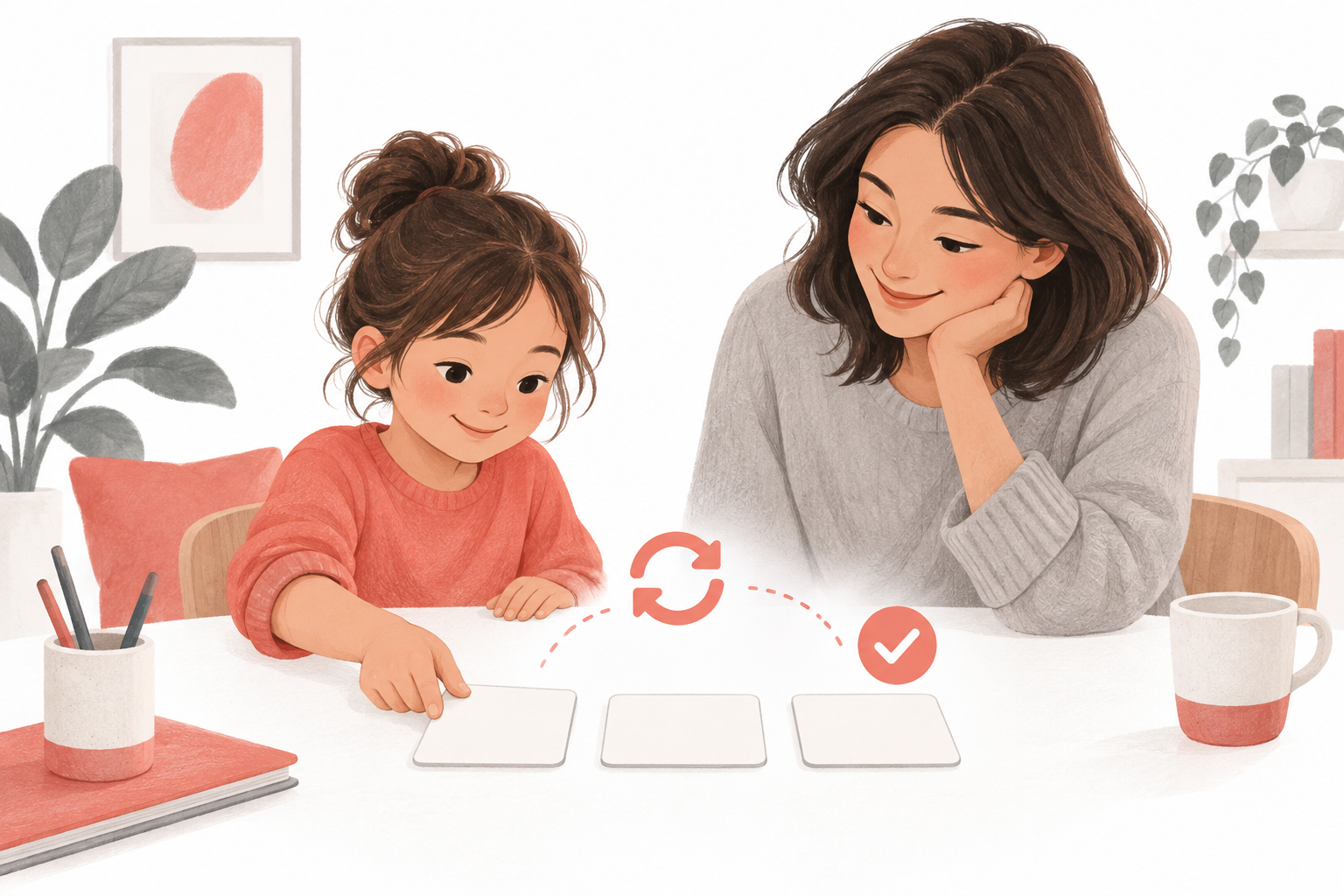
Is it good for a child to memorize piano music?
It can be. Young beginners often remember a short song after hearing and repeating it several times. That memory can reduce hesitation and let the child focus on rhythm, expression, hand movement, or playing the whole piece without stopping.
The concern is not memorization itself. The concern is relying on one memorized sequence so completely that the child cannot explain the pattern, find a starting point, recover after a mistake, or use the same skill in a new song.
A balanced goal is simple: remember the song and understand enough of it to rebuild the song. The child does not need to describe every musical detail at once. A beginner may start by recognizing the opening location, counting the rhythm, spotting repeated and changing patterns, and connecting a few written cues with the sounds they already know.
What does memorizing piano songs help children learn?
Memory can support several important beginner skills when it grows alongside understanding.
- Musical flow: the child can keep a familiar phrase moving instead of decoding every note separately.
- Listening: remembering how a song sounds makes it easier to notice a missing beat, wrong direction, or surprising note.
- Pattern recognition: repeated rhythms, melodic shapes, hand positions, and chord patterns become easier to recognize.
- Coordination: a familiar sequence can free attention for fingering, two-hand timing, or a comfortable hand move.
- Confidence: finishing a recognizable song can give a beginner a meaningful early win.
- Performance readiness: a secure memory can help a child continue through a piece without depending on constant prompts.
These benefits fit naturally with song-based beginner learning. Children often feel more motivated when the music sounds like music early. The teacher's job is to use that success as a bridge toward broader musicianship rather than treating a correct performance as the end of the lesson.
Parents who are deciding how different beginner skills fit together may also find the guide Should Kids Learn Piano Chords or Read Notes First? helpful.
Why should memory not replace note reading and listening?
A child can sometimes reproduce a sequence through finger habit alone. That may sound correct until a small interruption occurs. If the child loses the next movement, the entire piece can disappear because there is no second route back into the music.
Balanced learning gives the child several routes:
- See it: notice a written note, rhythm, direction, or repeated shape.
- Hear it: remember the sound and listen for whether the result matches.
- Feel it: use a comfortable movement or familiar fingering pattern.
- Explain it: name the starting place, count, hand job, or pattern in simple words.
The routes do not need to be equally strong on every day. A new reader may depend more on listening and pattern recognition while notation catches up. Another child may read accurately but need help hearing the phrase. Good instruction notices the strongest route and deliberately builds the missing one.
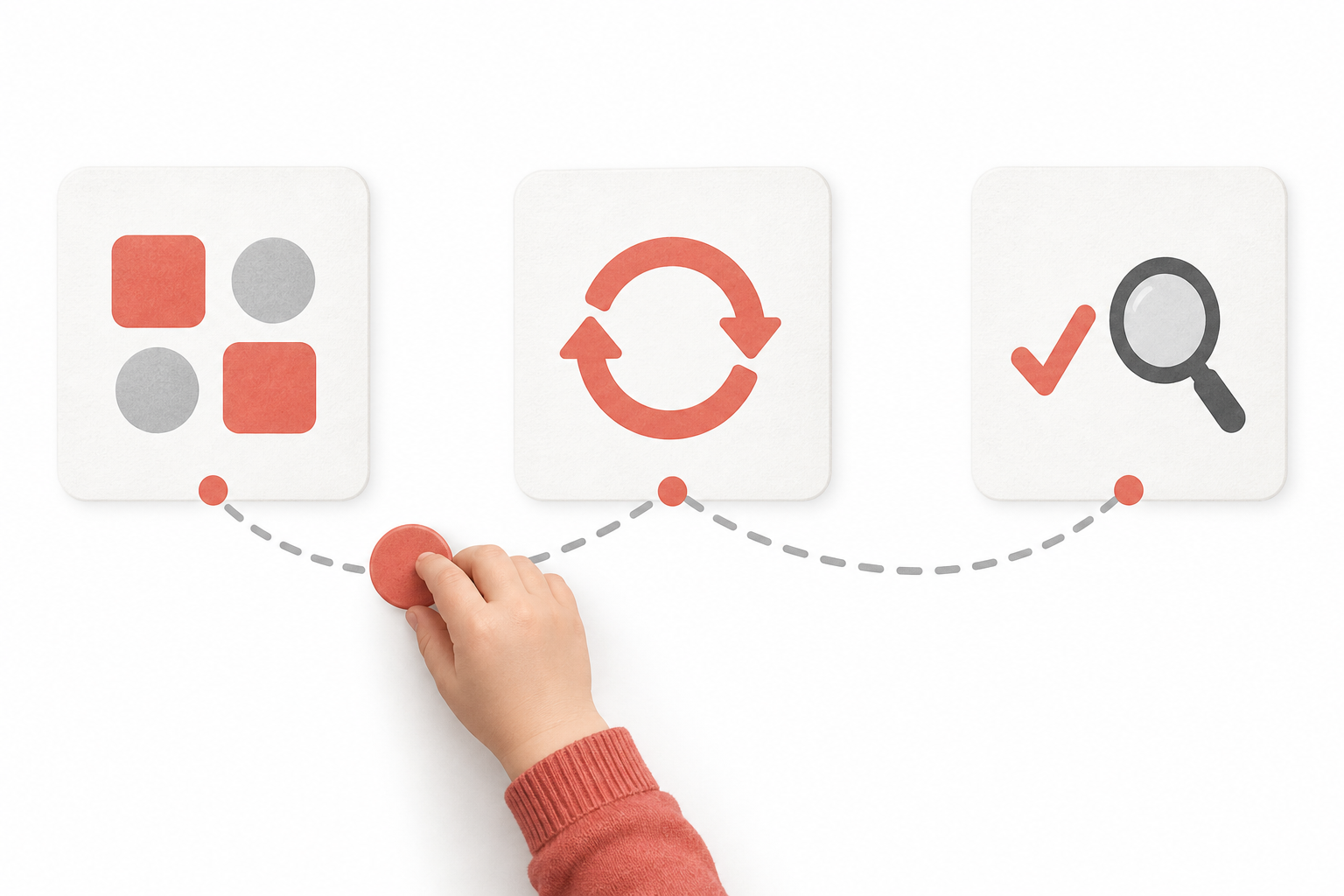
How can parents tell whether a piano song is truly learned?
Do not test a child by trying to make them fail. Use one friendly check at a time, preferably after the child has played the piece normally.
1. Ask for the starting place
Can the child find the opening location without someone placing every finger? A teacher may give an age-appropriate cue, such as a hand position, note name, or nearby group of black keys. The goal is independent orientation, not a surprise quiz.
2. Begin from a second spot
Choose the start of a new phrase or another location the teacher has already marked. If the child can begin there, the song is becoming a set of understood sections rather than one long chain of movements.
3. Describe one pattern
Ask what repeats, what changes, or where the music moves higher or lower. A short answer is enough. The point is to connect memory with observation.
4. Recover after a pause
If the child stops, wait a moment before giving the next note. Can they listen internally, look for a cue, count the rhythm, or return to the beginning of the small section? Recovery is a useful musical skill of its own.
5. Use the skill in another song
The strongest evidence of learning is transfer. If the child practiced a repeated rhythm, chord shape, or hand move, can they recognize something similar in a different piece? That shows the lesson is becoming reusable knowledge.
For a wider view of progress beyond finished songs, see seven signs a child is making progress in piano lessons.
A six-minute routine for memory, reading, and recovery
Use the teacher's current assignment and keep the routine small. Parents do not need to add new fingering or rewrite the lesson.
- Minute 1: Find. Let the child locate the starting place and say or show one useful cue.
- Minutes 2–3: Read and notice. Work on one short section while pointing out a repeat, rhythm, direction, or hand job.
- Minutes 4–5: Look away and recall. Play the same short section from memory, then check it against the music or lesson cue.
- Minute 6: Connect. Play a comfortable larger section for musical flow and finish with a clear success.
If the recalled version and the written version disagree, stay neutral: “Let's check that spot” is more useful than “You memorized it wrong.” The child is learning to compare two sources of information. That comparison is exactly what makes memory more reliable.
What if the child resists looking at the music?
Make the reading task smaller. Ask for one starting cue, one rhythm, or one repeated shape instead of demanding that the child visually track the entire piece. Share the pattern with the teacher if resistance continues; the music may be too dense, the print may be hard to follow, or the child may need a clearer reading sequence.
What if the child forgets the song between lessons?
That can mean the piece was stored as a fragile movement chain. A same-day recap, a clear starting cue, and practice from two small sections can make the plan easier to retrieve. The separate guide on remembering what to practice after piano lessons offers a parent-friendly weekly routine.
Questions to ask a piano teacher about memorization
- What should my child be able to recognize in this song, not just repeat?
- Which starting places should my child know?
- How are listening, rhythm, note reading, and chords developing together?
- Should this piece be memorized, read from the page, or practiced both ways?
- What cue should we use at home if my child gets stuck?
- How can we check the piece without turning practice into a test?
A useful answer should be specific to the child's current level and assignment. Some songs are excellent memory pieces. Others are chosen to build reading, counting, hand independence, or a new position. The purpose of the piece should guide the practice method.
Kids and piano memorization FAQ
Should every child memorize piano songs?
No. Memorization can be useful, but every song does not need the same goal. A teacher may ask a child to memorize a performance piece while keeping another piece open for reading practice.
Is playing by ear the same as memorizing?
They overlap but are not identical. Playing by ear means using listening to find or reproduce sounds. Memorizing means storing a sequence or musical idea for later recall. A child may memorize by listening, reading, repeating movements, noticing patterns, or combining several of these routes.
Does memorizing mean my child is not reading music?
Not automatically. Many children read a piece repeatedly and naturally memorize it. Ask whether the child can still identify the starting point, count a rhythm, notice a pattern, or read a new short example. Those checks reveal more than whether the page is open.
Should my child close the music while practicing?
Only for a specific purpose. The child might play a short section from memory and then reopen the music to check it. Keeping the page available makes verification easy and prevents guessing from becoming the default.
Why does my child always restart from the beginning?
The piece may be stored as one continuous chain. Practice beginning at two or three section starts that the teacher has identified. This makes recovery easier and reduces unnecessary full-song repetition.
Can memorization build confidence for a recital?
It can, especially when the child also knows several restart points and understands the piece's structure. Confidence is stronger when memory has backups: listening, visual cues, rhythm, and section landmarks.
Build memory that helps children become independent musicians
Memorizing a song is not a shortcut to avoid learning, and it is not complete learning by itself. It is one useful route into the music. The best beginner experiences connect recall with listening, reading, rhythm, patterns, chords, and the ability to recover.
If your child loves playing familiar songs, keep that strength. Then add one small check that helps them understand and rebuild what they remember.