What Should a Child Learn in the First Year of Piano Lessons?
A child’s first year of piano lessons should build a usable musical foundation, not a race toward advanced pieces. By the end of a well-structured beginner year, many children can find their way around the keyboard, keep a steady beat, read simple music, coordinate both hands in beginner patterns, play short songs, understand basic chords, and practice with growing independence. The exact pace will vary with age, attendance, practice consistency, lesson format, and the child’s starting point.
That range is normal. A six-year-old who is learning to focus for a short lesson will not follow the same timeline as a ten-year-old who already sings, counts rhythm, or has played another instrument. The more useful parent question is not “How fast is my child?” It is “Are the right skills becoming more comfortable over time?”
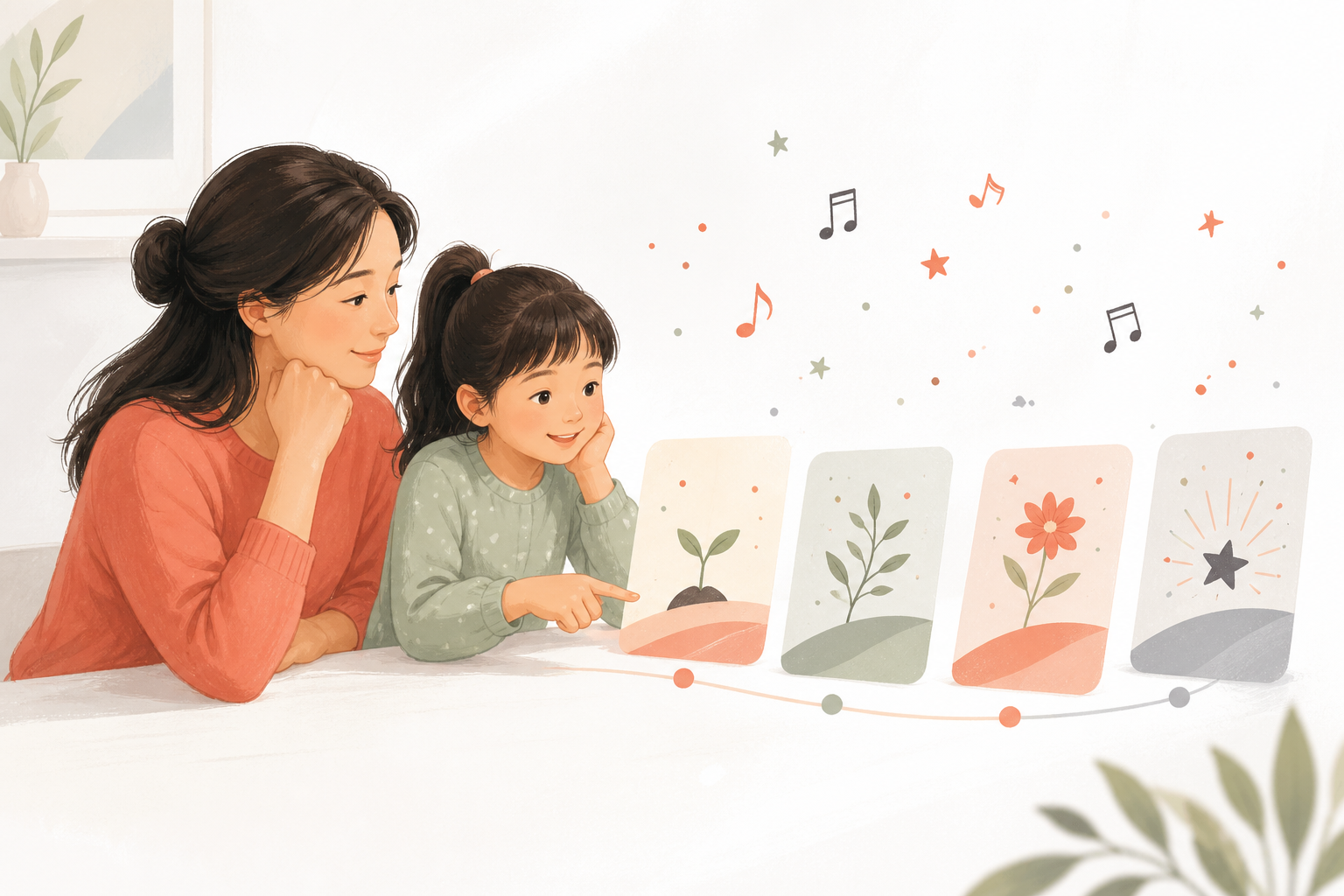
What is a realistic first-year piano outcome?
A realistic first-year outcome is a child who can make music with more confidence and less adult help than when they began. That does not mean every note is correct or every song is polished. It means the child is connecting several beginner skills: listening, rhythm, keyboard geography, notation, movement, memory, and musical expression.
Most beginners grow unevenly. A child may have excellent rhythm but need more time with note reading. Another may read accurately yet hesitate when the hands play together. A strong program keeps those areas moving forward without making one weak skill feel like failure.
Seven skills children should build during the first year
1. Keyboard geography
Children should learn how the keyboard is organized and how to find notes without depending on stickers forever. That usually includes recognizing the repeating groups of two and three black keys, locating note names, understanding higher and lower sounds, and finding a reliable starting position.
Keyboard geography matters because it lets a child recover independently. Instead of waiting for an adult to place every finger, the student can look for a familiar pattern, find the correct area, and begin again.
2. Steady beat and basic rhythm
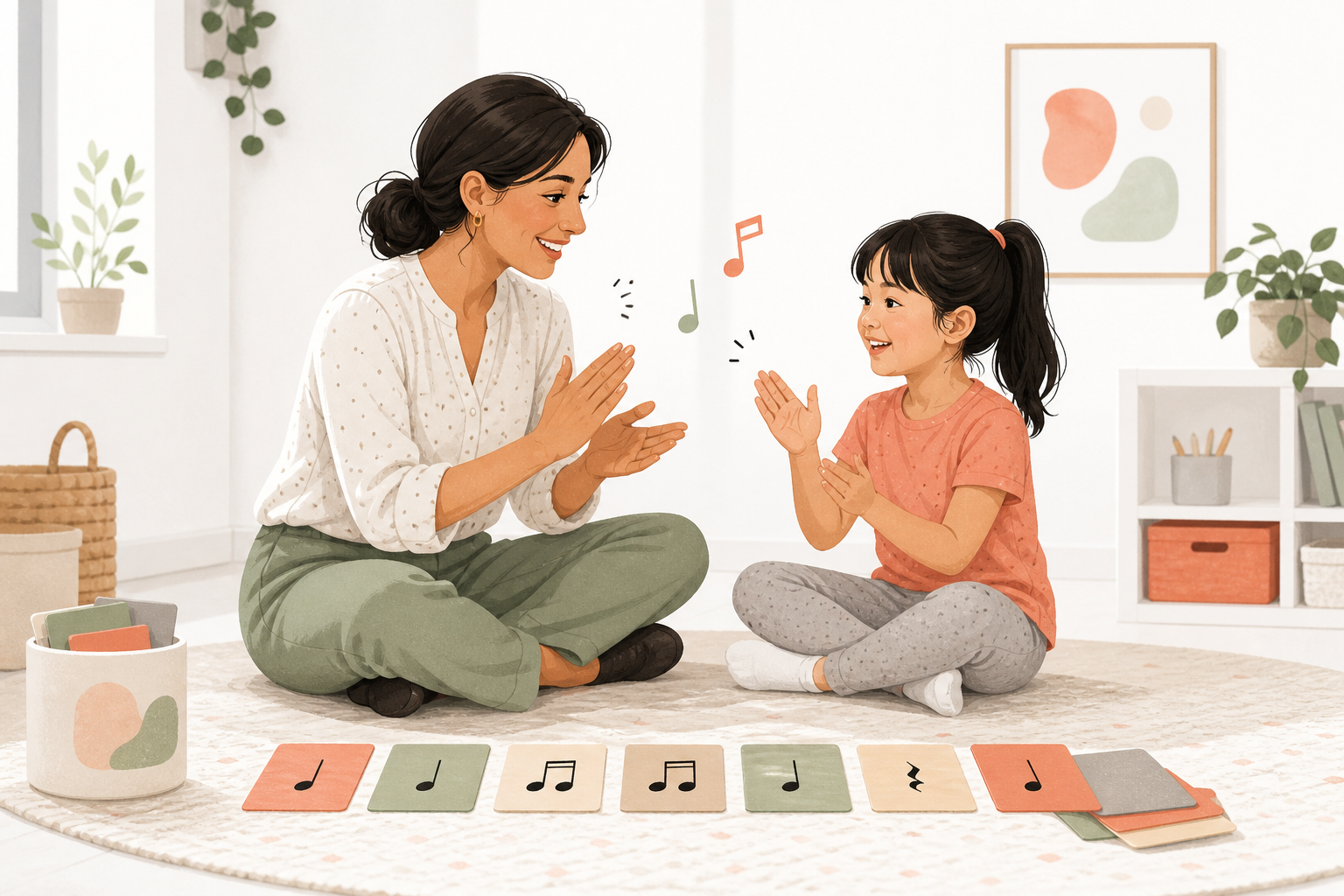
Rhythm often develops before fluent note reading. During the first year, children should practice feeling a steady beat, counting simple patterns, matching long and short sounds, and recognizing common beginner note values and rests. Clapping, tapping, moving, speaking rhythm syllables, and playing rhythm games can all support this skill.
A child does not need to explain every rhythm term perfectly to show progress. Listen for whether the song keeps moving, whether repeated patterns sound consistent, and whether the child can restart after a pause without losing the beat completely.
3. Simple note reading
First-year students should begin connecting written symbols to sounds and movement. That can include recognizing the staff, understanding whether notes move up or down, reading simple stepwise patterns, locating a few anchor notes, and following basic musical directions.
Children do not need to memorize every note on both staves before they can play meaningful music. Reading grows through patterns, landmarks, listening, and repetition. If your child is still early in this process, our guide to starting piano before fluent music reading explains why notation can develop alongside playing.
4. Finger control and healthy coordination
Beginner piano asks children to coordinate fingers that may not yet move independently. The first year should build comfortable hand shape, finger-number awareness, controlled presses, simple changes of position, and an ability to play short patterns without excessive tension.
Progress may look small: fewer collapsed fingers, smoother repeated notes, or a child remembering which hand begins. Those changes are more useful than forcing speed. If the shoulders, wrists, or hands look consistently tight, the child is in pain, or practice becomes physically uncomfortable, stop and ask the teacher to review the movement.
5. Two-hand readiness
Playing with both hands does not have to mean a complex two-hand piece. A child may start by alternating hands, holding one note while the other hand plays, adding a simple chord, or coordinating a short repeated pattern. These are legitimate steps toward fuller two-hand playing.
The goal is coordinated attention. Can the child keep one musical job steady while another job changes? That skill takes time, and it often improves in bursts rather than in a straight line.
6. Melody, chords, and musical patterns
A balanced beginner year should include more than isolated note drills. Children should experience melodies they can recognize, repeated patterns they can predict, and basic chord shapes or accompaniment ideas that make the music feel complete.
At iPianoLab, students play songs they enjoy early while building fundamentals such as rhythm, counting, note reading, two-hand coordination, melody, chords, and music literacy. That connection between skill and song helps children understand why the fundamentals matter.
7. A simple independent practice process
By the end of the first year, many children can begin a short practice session with a clear task, repeat a difficult spot, and explain what they are working on. Younger beginners will still need reminders and structure, but parents should not have to teach every lesson again at home.
Independence grows when the assignment is small and specific. “Play piano” is vague. “Clap the rhythm twice, play the first four measures slowly, then finish with your favorite song” gives a child a usable plan. For frequency ideas, see how many days a week a child should practice piano.
A first-year piano timeline for parents
This timeline is a guide, not a grading scale. Lesson calendars differ, and children may move faster in one area than another.
| Approximate stage | What may be developing | What parents can notice |
|---|---|---|
| Months 1–3 | Keyboard orientation, steady beat, finger numbers, short patterns, first songs | Your child can find a starting area, copy a small pattern, and recognize at least one musical success |
| Months 4–6 | More rhythm values, early staff reading, smoother hand changes, repeated practice steps | Your child needs fewer reminders for familiar material and can name one thing to improve |
| Months 7–9 | Longer songs, stronger pattern reading, simple chords or two-hand jobs, clearer dynamics | Your child can keep going through a small mistake and hear when something feels different |
| Months 10–12 | Greater independence, a broader song set, more fluent reading, coordinated beginner arrangements | Your child can start a short session, follow a plan, and demonstrate several connected skills |
What first-year progress should not be measured by
A first-year child does not need to play advanced repertoire, practice for long periods, memorize every note name instantly, or perform without mistakes. Those standards can hide meaningful progress and make children feel behind when they are still building normal beginner coordination.
Avoid comparing your child with recital clips, siblings, classmates, or another student’s practice schedule. Different children may reach the same musical foundation through different paths. Compare today’s child with the child who started: Are they more comfortable beginning? Can they hear patterns? Do they recover more easily? Can they explain what they are learning?
How to tell whether the first year is working
Look for a cluster of signals rather than one perfect performance:
- Your child can play at least a few short pieces or patterns with recognizable rhythm.
- They understand where to begin and can find familiar notes or positions.
- They use lesson language such as beat, measure, note, chord, hand, or pattern with growing confidence.
- They can identify one hard spot instead of saying the whole song is impossible.
- They show some musical choice through dynamics, phrasing, tempo, or favorite songs.
- Practice needs less minute-by-minute adult direction.
- The teacher can explain the next skill and why it matters.
If you are unsure whether the format or teacher relationship is helping, use our guide to evaluating whether a piano teacher is a good fit for your child.
Questions to ask at the end of the first year
- Which skills are now comfortable for my child?
- Which skill should become the main focus next?
- What can my child practice without adult teaching?
- Is the current lesson format still a good match?
- What kind of song or project would create an achievable next win?
These questions keep the conversation practical. They also help you distinguish a normal learning plateau from a mismatch in pace, format, or support.
Choose a next step that fits your child
Some beginners thrive in an after-school group because the shared routine creates energy and consistency. Others benefit from a different pace, an online option, or a lesson path with more individual support. The best next step is the one that keeps the fundamentals moving while helping the child feel capable.
Explore iPianoLab signup options for beginner-friendly learning paths. Families who need a flexible home-based option can also learn about iPianoLab online learning.
FAQ: the first year of piano lessons
Should a child be able to read music after one year?
Many children can read simple beginner music after a year, especially familiar patterns and a growing set of landmark notes. Fluency varies. Reading should improve alongside rhythm, listening, keyboard geography, and coordination rather than being treated as the only measure of success.
Should a child play with both hands after one year?
Many beginners can handle some form of two-hand coordination after a year, but the difficulty will vary. Alternating hands, holding a simple note or chord, and playing repeated accompaniment patterns all count as two-hand progress.
How many songs should a child know after one year?
There is no useful universal number. One child may learn many short songs while another spends longer on fewer pieces. A healthier check is whether the child has a small set of playable favorites and can learn new beginner material with increasing independence.
What if my child seems behind after one year?
Ask the teacher for a skill-by-skill review before assuming the child is behind. Attendance, age, practice routine, learning differences, lesson format, and goals all affect the timeline. Look for specific next steps and whether the child is making progress from their own starting point.
Is one year enough to know whether piano is a good fit?
A year usually provides useful evidence about interest, routine, format, and support needs, but it does not predict a child’s long-term musical potential. If motivation is low, review the music choices, practice expectations, teacher fit, and lesson format before making an all-or-nothing decision.
The strongest first-year outcome is not a flawless performance. It is a child who understands more, can do more independently, and is ready for the next achievable musical challenge.