Why Does My Child Confuse Ties and Slurs on Piano?
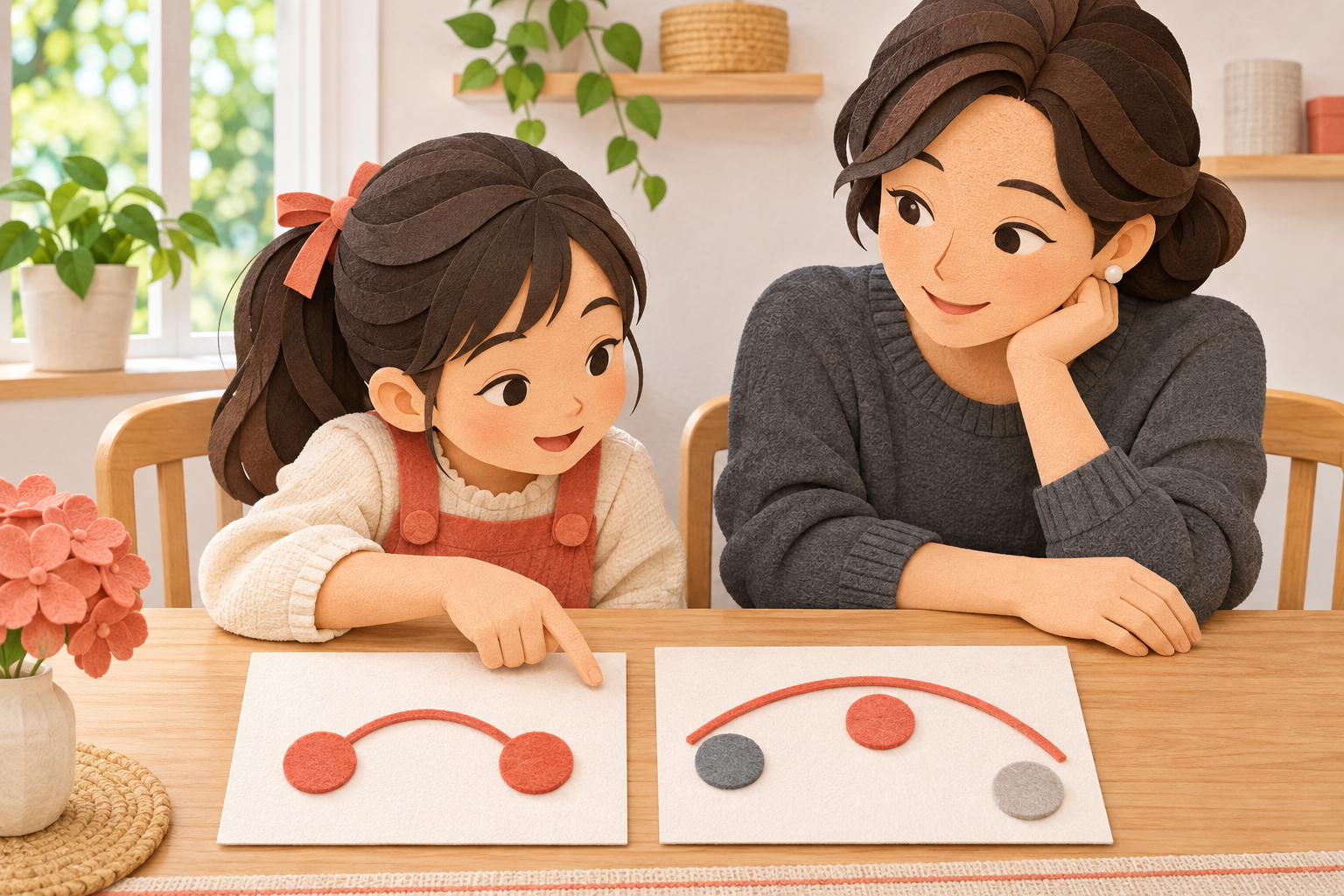
Quick answer: ties and slurs look similar because both are curved lines, but they give a beginner different jobs. A tie joins two notes of the same pitch so the second note is held rather than played again. A slur usually groups different notes into one smooth musical gesture. If your child treats every curve the same way, compare the noteheads first, then practice one tiny example at a time.
Why do ties and slurs look confusing?
Beginning readers already have several things to track: pitch, rhythm, fingering, hand position, and the next movement. A curved line can be easy to notice but hard to interpret while all of those jobs are happening at once.
The visual difference is not simply the shape of the curve. The child must look at the notes the curve connects. If the connected noteheads show the same pitch, the line may be a tie. If the line groups several different pitches, it is functioning as a slur or phrase mark. The musical context and the teacher's directions still matter, so use this as a reading check rather than a reason to rewrite an assignment at home.
Tie or slur: what should a parent listen for?
| What the child sees | Likely job | What you may hear when it is missed |
|---|---|---|
| A curve between two notes of the same pitch | Hold through the combined value; do not replay the second note | The second note is struck again, creating an extra attack |
| A curve over or under different pitches | Connect the notes smoothly as one musical group | Each note sounds detached, or the child stops at the curve |
| A longer curve across a group | Follow the teacher's phrasing or articulation direction | The child treats the curve as a hold and loses the following notes |
Before correcting, ask your child to point to the first and last note under the curve. Are they the same pitch or different pitches? That one observation often reveals whether the problem is symbol recognition, rhythm, or smooth coordination.
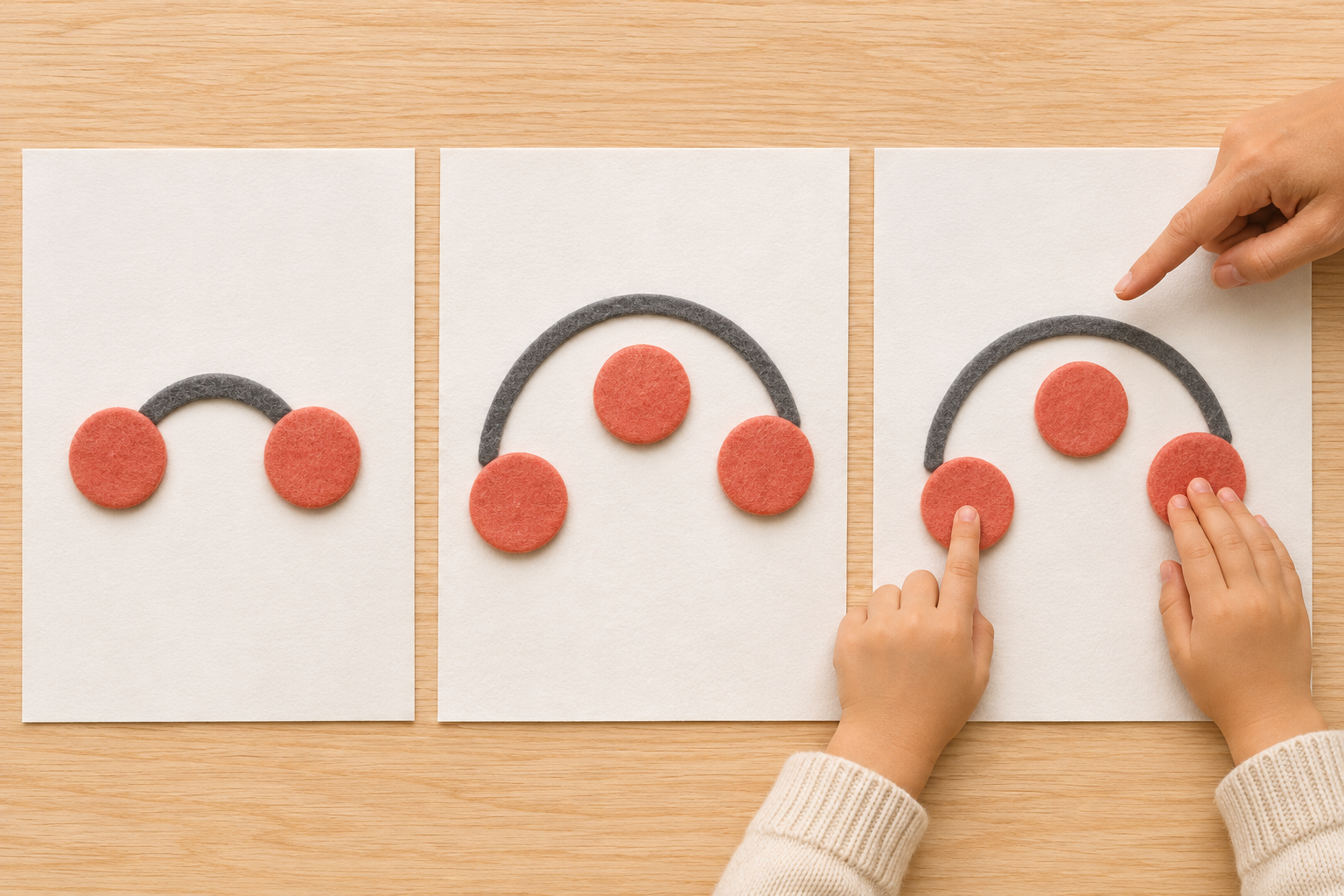
A five-minute look–compare–play routine
Use one tie and one slur from the assigned music, or ask the teacher to mark two safe examples. Keep the section small enough that the child can focus on the curve instead of the whole song.
- Look. Point to the two ends of the curved line without playing. Let the child identify the connected noteheads.
- Compare. Ask, “Are those the same pitch or different pitches?” Avoid naming the answer before the child has time to look.
- Say the job. For a tie, try “hold, do not replay.” For a slur, try “connect these notes smoothly.” Use the wording the teacher prefers.
- Play the smallest example. Play only the tied pair or the short slurred group slowly. Stop before attention shifts to the next challenge.
- Check once in context. Add one note before and after the target. If the distinction disappears, return to the smaller example and save the exact question for the teacher.
Two attentive repetitions are usually more useful than playing the whole page over and over. The goal is not to make a child memorize every curved-line rule in one sitting. It is to build a repeatable way to inspect the music.
Common mix-ups and what they mean
The child replays every tied note
The child may recognize the curve but still follow the habit of pressing every printed note. Have them tap one continuous beat span on the table, then return to the tied notes and listen for a single beginning followed by continued sound.
The child holds a slur as if it were one long note
Ask them to trace the different noteheads under the curve. A slur does not erase those pitches; it asks the player to connect them. Work with two or three notes before extending the phrase.
The child understands away from the piano but forgets while playing
That usually means the idea is understood but not yet coordinated with note finding and rhythm. Reduce the task: one hand, a slower tempo, and the smallest musical group. This is the same kind of attention load described in the guide to playing the right notes with the wrong rhythm.
The curved line seems ambiguous
Do not guess or redraw it. Printed music can include ties, slurs, phrase marks, and other markings that need musical context. Circle the location lightly if the teacher allows it, or note the measure number and ask what the curve means in that specific piece.
What should parents say during practice?
- “Show me the notes at both ends of the curve.”
- “Are those the same pitch or different pitches?”
- “Do we hold one sound, or connect several sounds?”
- “Let's try only the notes under the curve.”
- “What should we ask your teacher about this measure?”
Avoid “You already know this” or “Every curve means the same thing.” Neutral questions keep the child looking at the evidence on the page and leave musical decisions with the teacher.
When should you ask the piano teacher?
Ask when the marking remains unclear after a few calm attempts, when the child cannot tell whether the connected notes match, or when the printed direction seems different from the demonstration. Bring a specific observation: “My child replays the second same-pitch note under this curve. Should we count through it or use a different cue?”
If the larger problem is that every note becomes the same length, use the right-notes, wrong-rhythm guide. If the child stops between notes even when the curve is understood, the guide to pauses between piano notes offers a smaller coordination routine.
Frequently asked questions
Does a tie always connect the same note?
A tie connects notes of the same pitch and combines their duration into one sustained sound. The second note is not attacked again.
Does a slur mean use the piano pedal?
Not by itself. A slur asks for a connected musical gesture; the exact touch and any pedal use should follow the teacher's direction and the piece.
Should a parent draw different colors on ties and slurs?
Only if the teacher agrees. Color can help temporarily, but the lasting skill is checking what the curve connects. Too many added marks can make the page harder to read.
What if my child cannot name the notes yet?
They can still compare. Ask whether the two noteheads are in the same place on the staff or in different places, then confirm the answer with the lesson materials or teacher.
Turn the curve into one clear job
A beginner does not need a long lecture about notation. They need a reliable check: look at both ends, compare the pitches, say the job, and play a tiny example. That routine turns a confusing curve into a specific listening and movement task.
Looking for a beginner piano path with clear weekly steps? Find an iPianoLab school class.
Find an iPianoLab School Class