What Should a Child Practice If They Forgot the Piano Lesson Assignment?
The short answer: do not guess at a new piano lesson. First, check the teacher’s note, marked page, lesson video, or online lesson. Then ask your child to show the smallest part they remember. If the assignment is still unclear, review one familiar skill or song the teacher has already introduced and save one specific question for the teacher.
Forgetting an assignment does not mean the lesson was wasted. A child may remember the sound but not the page, the page but not the starting note, or the song but not the teacher’s practice cue. The useful goal is to recover one safe next step without turning a fuzzy memory into a week of guessing.
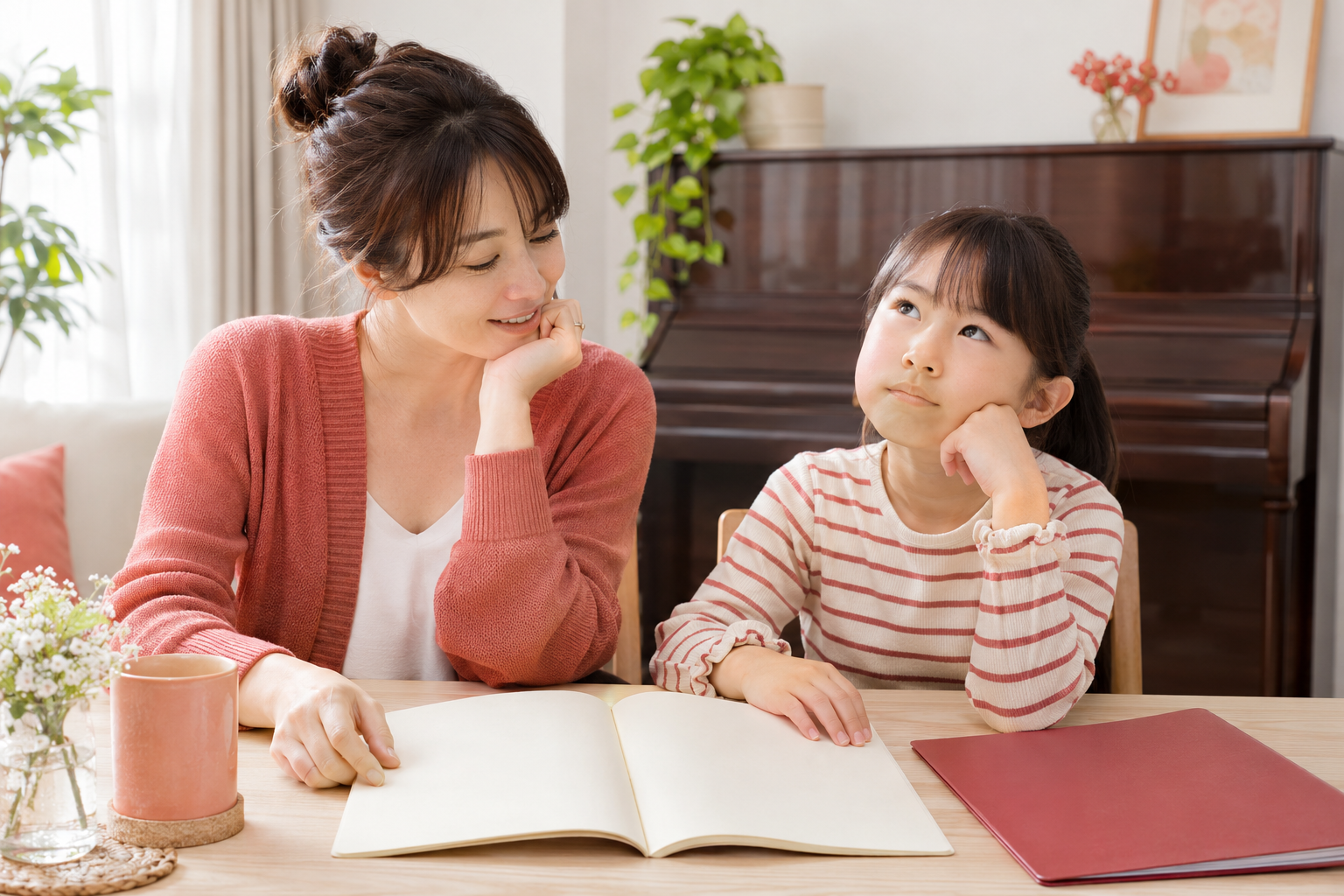
Use a three-step reset: find, show, shrink
When your child says, “I forgot what to practice,” avoid the broad instruction to play everything. Use these three steps instead.
1. Find the assignment source
Look for the place where the lesson normally leaves a trail. That may be a notebook, a marked music page, a printed sheet, a short recording, or the next lesson in an online sequence. Check one source at a time so the child is not sorting through several books and screens at once.
If the source identifies a page but not the goal, treat that as incomplete information. “Page 12” does not tell a beginner whether to clap the rhythm, play one hand, join both hands, or review the whole piece.
2. Ask the child to show what they remember
Use concrete questions instead of “What did your teacher say?” Try:
- “Can you show me where the lesson started?”
- “Was the job about the notes, the rhythm, or the fingers?”
- “Did your teacher ask you to play, clap, count, listen, or watch?”
- “What is the first small part you remember doing?”
Let your child demonstrate before you correct. A few notes, one clap pattern, or one remembered starting place may reveal enough to continue. If your child cannot show it, that is useful information too.
3. Shrink the task to one safe action
Choose the smallest action that clearly belongs to material the teacher has already introduced. That might be finding the starting place three times, clapping one familiar rhythm, playing one short marked section, or reviewing a song the child already knows.
Stop after one useful review if the next step remains uncertain. More repetition does not make a guessed instruction more accurate.
| What your child remembers | Helpful next move | What to avoid |
|---|---|---|
| The page and exact starting place | Review the smallest clearly assigned section | Expanding it to the whole book |
| The song, but not the practice goal | Play one familiar section and write down the missing question | Inventing new fingering or technique |
| A rhythm or movement, but not the notes | Repeat that known rhythm or movement away from the keys | Guessing notes until something sounds familiar |
| Nothing from the new assignment | Review familiar material briefly and contact the teacher | Turning the session into a memory test |
What can a child safely practice while waiting for clarification?
Safe review uses skills and music that have already been taught. Depending on the child’s lesson plan, options may include:
- a familiar song or section the child can already start independently;
- a teacher-introduced warmup or rhythm pattern;
- finding a previously marked starting note or hand position;
- clapping or counting a rhythm the child recognizes;
- listening to an assigned example or replaying the relevant lesson video; or
- organizing the book, notebook, and next question for the teacher.
“Safe” does not mean effortless. It means the child understands the job well enough to attempt it without a parent inventing the musical instruction. If you do not play piano, you can still help your child find the source, name the task, and keep the review manageable. The separate iPianoLab guide on helping a child learn piano when the parent does not play explains that support role in more detail.
What should parents avoid when the assignment is unclear?
Avoid solving the uncertainty with more pressure. In particular, do not:
- ask the child to play every song “just in case”;
- choose new fingering, hand positions, or technique from memory;
- search unrelated tutorial videos and combine several teaching methods;
- repeat a confusing passage until frustration replaces listening;
- measure the session only by minutes; or
- tell the child that forgetting proves they were not paying attention.
A short, accurate review is more useful than a long session built on the wrong goal. If your family needs a realistic weekly rhythm, see how many days a child should practice piano and adjust the schedule with the teacher’s assignment in mind.
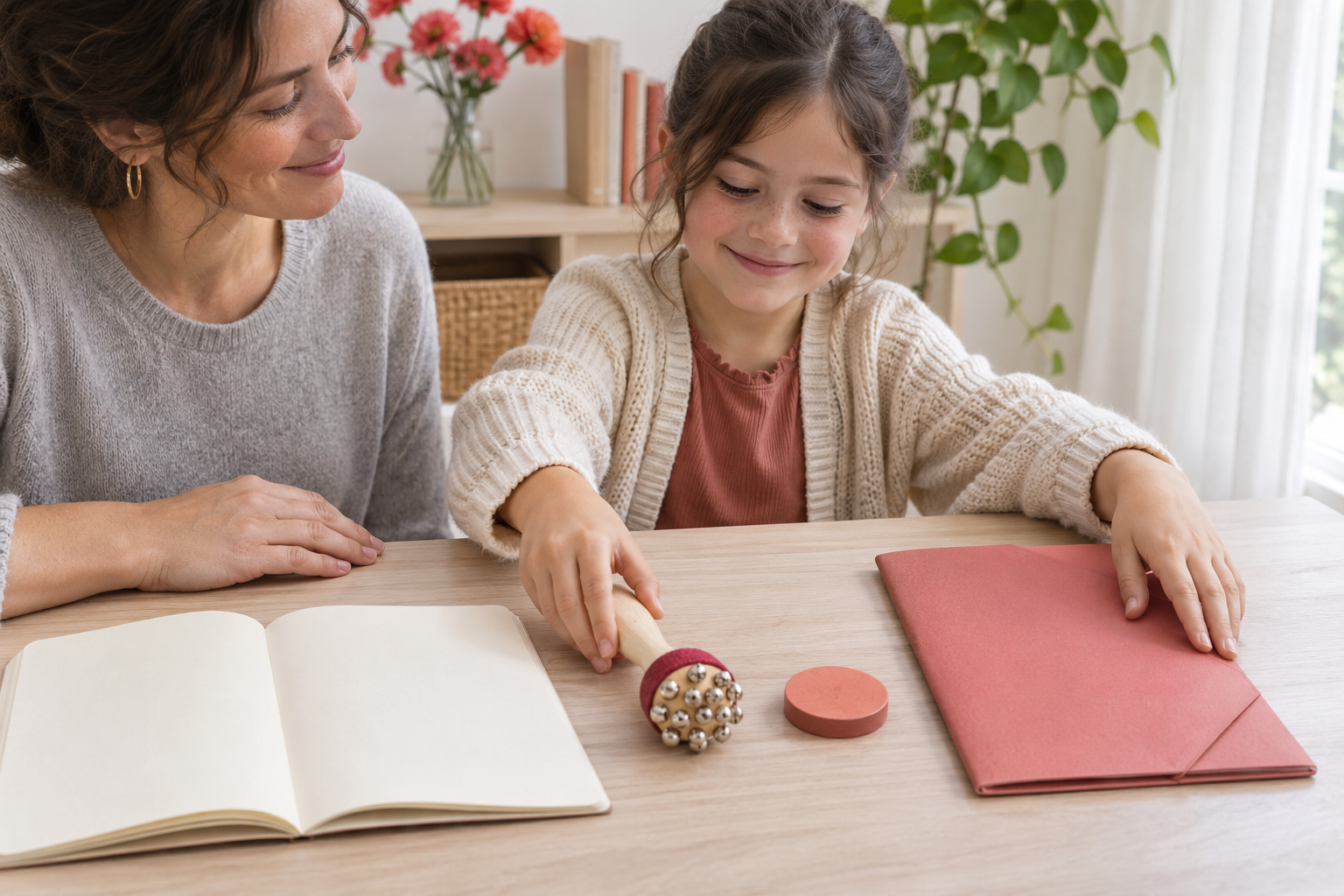
Try a five-minute lesson-to-home handoff
The easiest time to protect the assignment is immediately after the lesson, before the details compete with the rest of the day. Use this short routine:
- Say the main goal. Ask your child to finish the sentence, “This week I am working on…”
- Find the starting place. Open the exact page, lesson, or section and have the child point to where practice begins.
- Name the action. Is the child supposed to play, count, clap, listen, watch, or repeat?
- Try one example. Let the child demonstrate a few seconds while the memory is fresh.
- Save one cue. Keep the teacher’s short note, mark, or recording with the material the child will use at home.
The handoff does not need to summarize the whole lesson. It only needs to make the first home practice easy to start.
What if this happens every week?
A recurring forgotten assignment may point to a handoff problem rather than a motivation problem. The task may be too broad, the note may not identify the starting place, the child may need a demonstration, or the learning format may not provide a clear next step between lessons.
Ask whether the child can answer four questions before leaving the lesson:
- What am I practicing?
- Where do I start?
- What action should I repeat?
- How will I know I am finished for today?
If those answers are regularly missing, share the pattern with the teacher. A good lesson fit should leave the child with an understandable next action, even when a parent needs to help open the materials. The iPianoLab piano-teacher fit guide includes more signs to watch.
How should a parent ask the teacher for help?
Send one specific question that describes what is known and what is missing. For example:
“We found the marked page and my child remembers the rhythm activity, but we are not sure which four measures to practice or whether to use one hand or both. Could you clarify the starting place and the main goal?”
That message is easier to answer than “We do not know what to practice.” It also keeps the teacher in charge of the musical decision instead of asking the parent to guess.
Choose a learning path with a visible next step
Clear practice begins with clear instruction. iPianoLab helps beginners build songs and foundational skills through an organized learning path, with options for families who need teacher guidance, flexible online learning, or a program that fits the school week.
Families can explore online piano learning with iPianoLab or find an iPianoLab lesson option. For a first-time family, the guide to what to expect at a child’s first piano class can make the next step easier to picture.
Frequently asked questions
Should my child skip piano practice if they forgot the assignment?
Not necessarily. Review one familiar, teacher-introduced skill or song, then record the exact question you need answered. Avoid guessing at new material.
Should I ask the teacher immediately?
Ask when the assignment source and the child’s demonstration still do not reveal a clear next step. A short, specific question can prevent several days of confused repetition.
What if my child remembers the song but not the correct fingers?
Do not invent the fingering. Play only what the child can do comfortably with the established plan, or pause that passage and ask the teacher to clarify the intended fingers.
Can a lesson video replace written practice notes?
A short relevant video can help when it shows the exact task, but the child still needs to know which part to watch and what to do afterward. Some families benefit from both a demonstration and one brief written cue.
How long should the fallback practice be?
Long enough to complete one accurate, familiar review without turning uncertainty into frustration. The teacher’s normal plan should guide the full practice length once the assignment is clear.
Does forgetting the assignment mean my child is too young for lessons?
No. Young beginners often need help carrying a new instruction from the lesson into home practice. Look at whether the task can be made clearer and whether the lesson format gives your child an understandable next step.