Can I Help My Child Learn Piano If I Don’t Play? A Parent Guide
Yes. You can help your child learn piano even if you have never played an instrument or read music. Your most useful job is not to become the teacher. It is to make practice easy to start, help your child follow the assignment, notice effort and small wins, and tell the teacher when something stays confusing.
A child needs clear instruction, a suitable way to practice, and steady encouragement. Parents can provide the routine and communication around those things without correcting every note or demonstrating technique. In fact, asking calm questions often works better than pretending to know the answer.
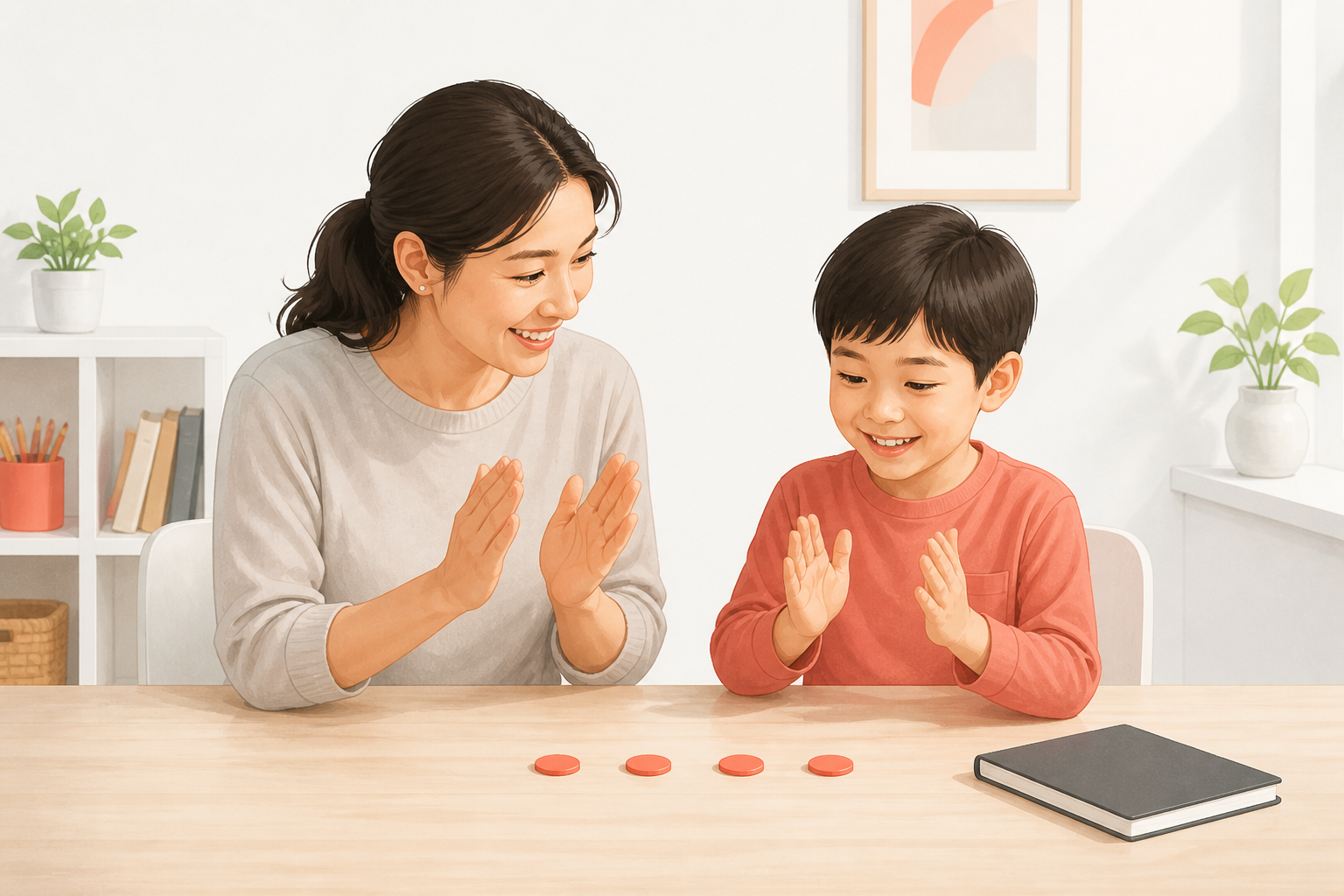
How can I help my child learn piano if I don’t play?
Focus on five things you can do without musical training:
- Protect a short practice time. Put it on the family schedule and make the instrument or lesson materials easy to reach.
- Read the assignment with your child. Ask what the teacher said to practice instead of inventing a new lesson.
- Help make the task smaller. One line, one rhythm, or one tricky spot is easier than repeating a whole song.
- Notice specific effort. Praise starting on time, slowing down, trying again, or remembering one step.
- Send useful questions back to the teacher. Describe the exact point where your child got stuck.
You do not need to name every note, judge the fingering, or decide whether the child is playing with perfect technique. Those are teaching decisions. Your job is to help the child use the plan consistently enough for the teacher to guide the next step.
What is the parent’s role in beginner piano lessons?
The parent supports the learning environment. The teacher or curriculum teaches the musical skill. Keeping those roles clear lowers pressure for everyone.
| The parent can help with | The teacher or curriculum should guide |
|---|---|
| Choosing a regular practice time | Which skill or song to practice |
| Making sure materials are ready | Fingering, hand position, and technique |
| Reading or replaying the assignment | How a rhythm or passage should sound |
| Encouraging a slower retry | When the child is ready for a harder version |
| Recording the child’s question | Diagnosing and correcting the musical problem |
You do not have to correct every mistake
If something clearly sounds different each time, ask the child what the assignment says or whether a lesson video demonstrates that section. If you are still unsure, stop correcting and save the question. Repeated guessing can be more confusing than bringing one precise question to the teacher.
You can model how learning works
A parent who says, “I don’t know yet—let’s check the instructions,” teaches persistence and problem-solving. That is valuable support. Children do not need a parent who already knows every answer; they need an adult who helps them use the right resource and try the next manageable step.
A simple piano-practice routine for non-musical parents
Use a three-part routine: listen, try, check in. It works with teacher notes, a printed assignment, or an online lesson.
1. Listen or review
Ask your child to show you the assignment. If a teacher demonstration or lesson video is available, review only the relevant part. The goal is to remember the task, not watch an entire lesson again.
2. Try one small section
Choose a short section your child can repeat without becoming overwhelmed. Let the child explain the goal in their own words. If the answer is vague, ask, “Are you working on the notes, the rhythm, or playing both hands together?”
3. Check in and stop clearly
At the end, ask what improved and what still needs help. Write down one question for the next lesson. Finish with a familiar song or easy section when possible so practice ends with music, not only correction.
This routine can take just a few focused minutes. Consistency matters more than turning one practice session into a long test. For a complete time plan, use the separate guide to how long children should practice piano.
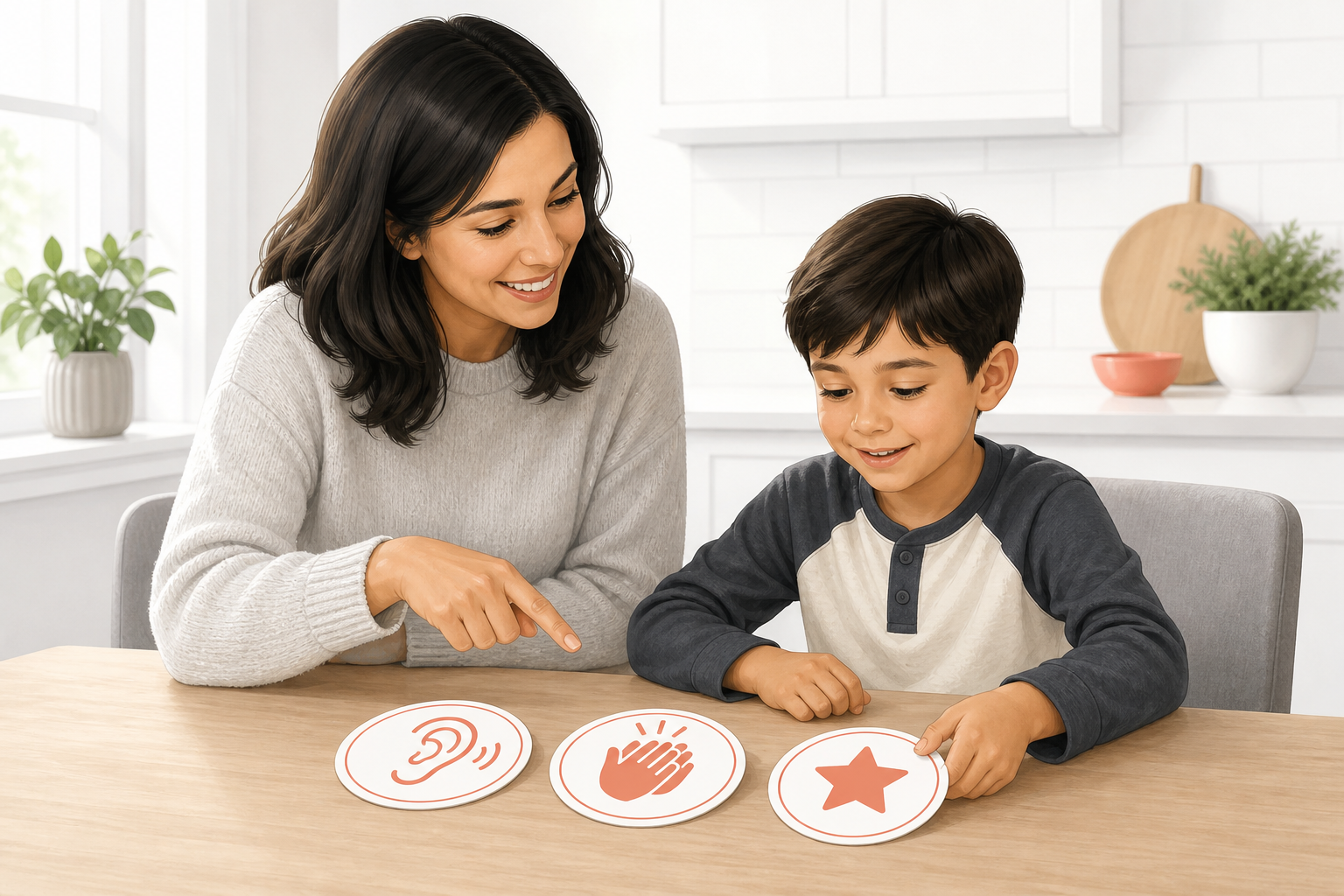
What should I say during piano practice?
Use questions that help your child think without turning you into the judge.
- “What did your teacher ask you to work on here?”
- “Can you show me the smallest part that feels confusing?”
- “Would it help to slow down or try one hand at a time?”
- “What changed between the first try and the second try?”
- “Should we write this question down for your teacher?”
- “Which easy part would you like to play before we finish?”
What should I avoid saying?
Avoid broad labels such as “You’re not practicing,” “You should know this,” or “That sounds wrong” when neither of you knows the specific correction. Replace them with an observable step: “Let’s check the assignment,” “Try that short part more slowly,” or “Let’s ask the teacher about this measure.”
If practice is regularly becoming a conflict, read how to help your child practice piano without battles. The answer is usually a clearer task, a smaller routine, or better communication—not more pressure.
How can I tell if my child is improving when I don’t play piano?
You can notice progress without evaluating concert-level accuracy. Look for changes in independence, consistency, and confidence:
- Your child starts with less prompting.
- They can explain what they are practicing.
- A short section becomes steadier or easier to repeat.
- They recover from a mistake instead of stopping completely.
- They recognize a pattern, rhythm, note location, or hand job from an earlier lesson.
- They ask a more specific question when something is difficult.
- They can play one familiar song or section with growing confidence.
Progress is not always a new song every week. Sometimes the most important change is that the child can count more steadily, restart a small section, use both hands more comfortably, or practice with less adult direction. Our first-year piano skills guide gives parents a broader view of the musical foundation beginners build.
Questions to ask the piano teacher
Tell the teacher that you do not play piano and ask for a support plan you can actually follow. Useful questions include:
- What is the one main goal for practice this week?
- How should my child know they are doing the assignment correctly?
- Is there a short demonstration, recording, or written reminder we can use?
- Which mistakes should we stop and ask about instead of trying to correct?
- How long should this assignment take for a beginner?
- What signs of progress should I watch for?
- How should I contact you if the same problem continues?
A good answer should make your role simpler. You should leave knowing what to prepare, what your child should try, and what belongs back with the teacher.
If you are comparing programs, use the piano-teacher fit checklist. For families deciding between learning formats, the guide to choosing piano lessons for a child covers group, private, online, and school-based options.
How iPianoLab supports families who are new to music
iPianoLab is built to make beginner piano approachable for children and families. Students can play familiar music early while building keyboard geography, rhythm, counting, note reading, melody, chords, two-hand coordination, and music literacy through a structured sequence.
Families can choose among current online, teacher-led, and school-based paths. The online program includes step-by-step video and interactive learning, while teacher-led options provide direct guidance and feedback. That structure gives non-musical parents a clear place to look when a child needs the next instruction.
Frequently asked questions
Do parents need to sit with a child during every piano practice?
Not always. Young beginners may need help starting, reading the assignment, or choosing a short task. As the child becomes more independent, the parent can check in at the beginning and end instead of watching every repetition.
Can I tell whether the notes are right if I cannot read music?
Use the teacher’s demonstration, lesson video, or assignment when one is provided. If you cannot verify the answer, record the exact question instead of guessing. You can still notice whether your child is repeating the assigned section, slowing down, and becoming more consistent.
Should I learn piano alongside my child?
You can if it sounds enjoyable, but it is not required. Learning alongside a child may model curiosity, yet the child still needs their own clear assignment and teacher feedback. Do not let your progress become the standard your child must match.
What if my child says, “You don’t know piano”?
Agree calmly: “You’re right—I’m not your piano teacher. I’m helping you follow the plan.” Then return to the assignment or save the question for the teacher. This keeps the relationship honest and avoids a power struggle over musical details.
How much should I remind my child to practice?
Use a predictable schedule and one clear reminder rather than repeated pressure throughout the day. If practice still does not start, ask whether the time, task, or difficulty needs adjustment. Share recurring problems with the teacher.
Are online piano lessons suitable for parents who do not play?
They can be when the program provides a clear sequence, understandable demonstrations, and a way to get support. Parents should know which lesson to use, what the child should practice, and where questions go when a task remains confusing.
Your child needs support, not a second piano teacher
Parents who do not play piano can still create the conditions that help children learn: a regular time, a clear assignment, a manageable next step, patient encouragement, and good communication with the teacher. Those supports are practical, learnable, and more useful than pretending to know every note.
Ready for a beginner path your family can follow? Explore iPianoLab online or create an iPianoLab account.