Why Does My Child Keep Playing the Wrong Piano Notes?
Quick answer: a beginner usually plays wrong piano notes because finding the written note, locating the matching key, choosing a finger, and keeping the beat are still separate jobs. One small break in that chain can send the hand to a nearby key. Slow the task down, confirm the starting place, and practice only two or three target notes before reconnecting the phrase.
Wrong notes are not proof that a child is careless, untalented, or ignoring the lesson. They are information. The pattern of the mistake can help you and the teacher decide whether the child needs a clearer starting position, a smaller section, steadier visual tracking, a consistent finger plan, or more time to hear the difference.
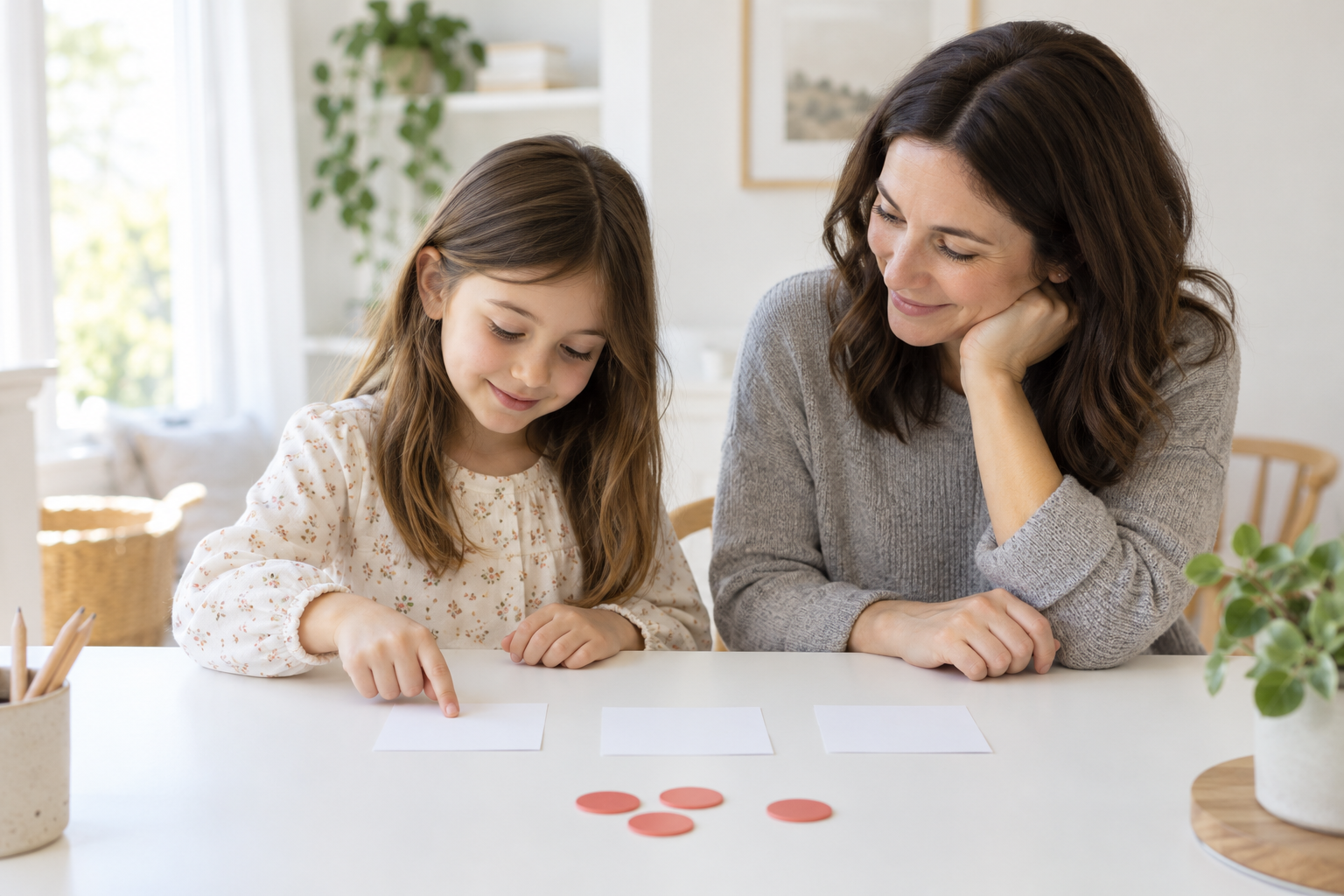
Why do beginners hit the wrong piano keys?
Beginning piano asks the brain and body to coordinate several things at once. A child may understand each part separately and still lose the connection when the music starts moving. Common reasons include:
- The starting position is uncertain. If the first note or hand location is guessed, the rest of the pattern may be shifted even when the child moves in the correct direction.
- The child is reading one symbol at a time. Their eyes may stay on the current note so long that the hand has no warning about what comes next.
- The practice section is too large. A whole line can hide the two-note movement that actually needs attention.
- The tempo is faster than the planning. The fingers move before the child has located the next target.
- The fingering keeps changing. Reaching the same note with a different finger can change the hand's distance and make the next key harder to find.
- The mistake has become familiar. Repeating a passage from the beginning can rehearse the same wrong turn without isolating it.
- The child hears that something is wrong but cannot identify where. A long correction such as “That whole part was wrong” does not give a beginner a useful place to restart.
Before correcting, notice whether the wrong note is always the same, appears only when the tempo increases, follows a large move, or begins after the child looks away from the music. A specific pattern is more useful than a count of total mistakes.
Should parents correct every wrong note?
No. Correcting every note while a child plays can overload attention and make practice feel like a test. Decide which skill the attempt is for. If the goal is to keep the beat or recover after a mistake, let the phrase finish and discuss one spot afterward. If the goal is accuracy on a tiny pattern, stop after the target and try it again deliberately.
Parents do not need to name the correct note or demonstrate the entire passage. A neutral observation is enough: “That second note changed on this try. Can you point to the two notes before you play?” The child stays involved in finding the answer, and the parent avoids becoming a second piano teacher.
Wrong note, wrong finger, or wrong starting place?
These problems can sound similar but need different responses.
- Wrong note: the hand goes to a different key than the music calls for. Reduce the passage to the approach and the target.
- Wrong finger: the pitch may be correct, but the child uses a finger that makes the next movement awkward. Check the teacher's marked fingering and use the related guide to consistent piano fingering.
- Wrong starting place: the pattern may be internally correct but begins from the wrong key. Confirm the first note and hand position before counting in.
- Lost visual place: the child may repeat or skip a note because the eyes moved to a different part of the page. Try the find, follow, return routine.
You do not have to diagnose the issue perfectly. Describe what you see and hear, then bring that observation to the teacher if it continues.
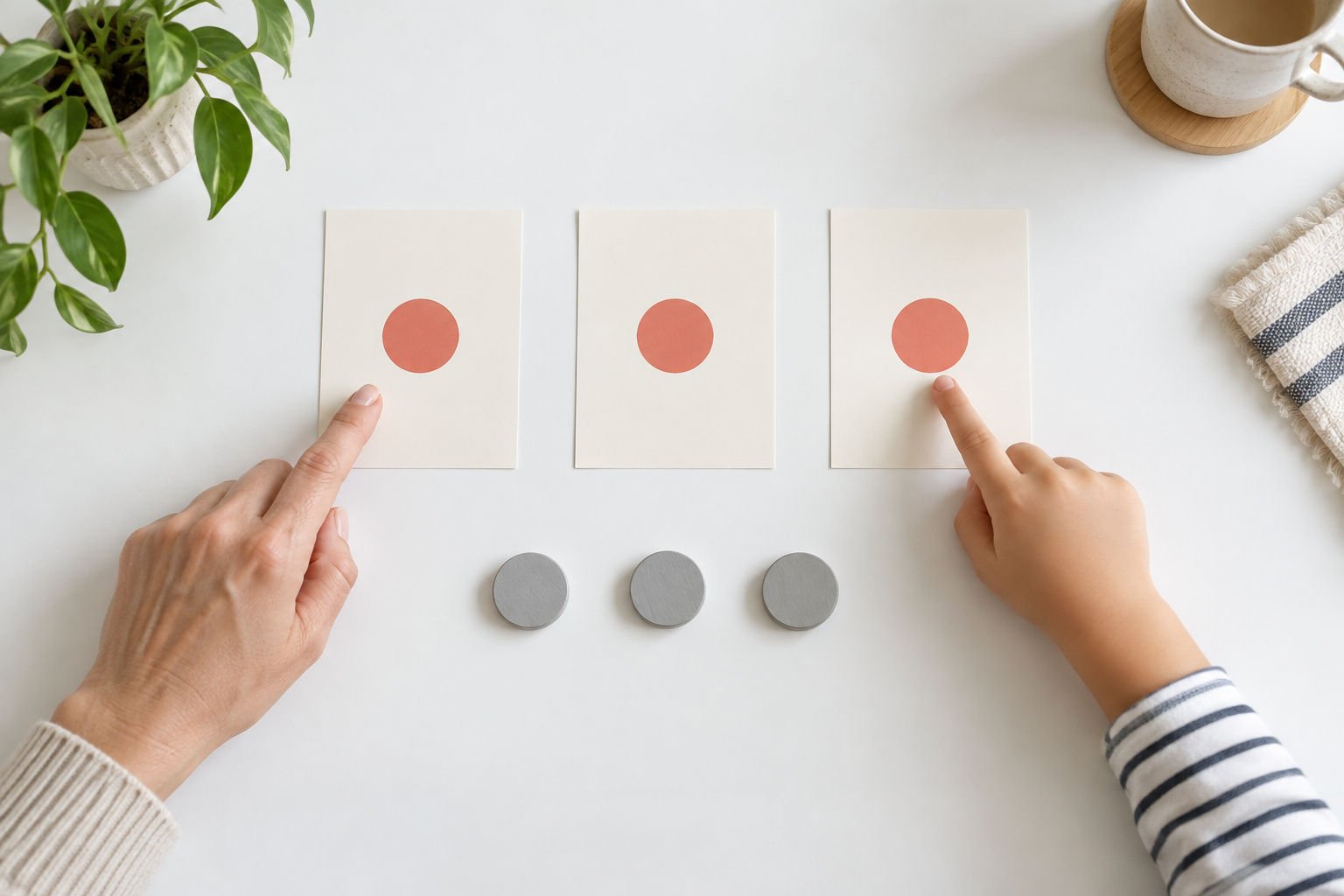
A five-minute “point, place, play” routine
Use this routine for one small trouble spot—not the entire song. Choose two or three consecutive notes that include the wrong turn.
- Point. Ask the child to point to the first note in the music, then the next one. If note names are not secure, use direction: same, step up, step down, or skip. Avoid writing a letter above every note; a single temporary landmark is usually more useful. See the guide on when note-name labels help.
- Place. Without playing, let the child put the hand in the starting position and silently touch the first target key. Check that the hand is comfortable and that the child knows where the next key is.
- Play. Play only the two or three notes slowly. Stop after the target instead of continuing through the whole song.
- Pause and compare. Ask, “Did that match what you pointed to?” Let the child answer before you supply a correction.
- Repeat twice. Two accurate, attentive repetitions are more useful than ten rushed attempts.
- Reconnect. Add one note before and one note after the small pattern. Then try the short phrase once in context.
If accuracy disappears as soon as the phrase grows, make the section small again. That is not going backward; it shows where the planning limit is today.
What should a parent say after a wrong note?
Use language that directs attention without attaching the mistake to the child's identity:
- “Let's find the exact place where the sound changed.”
- “Can you show me the starting note before you play?”
- “What direction does the next note move?”
- “Try those three notes slowly enough to plan each landing.”
- “Was the problem the note, the finger, or the starting place?”
- “Play it once more, then we'll move on.”
Avoid “You know this,” “You're not concentrating,” or “Start over and do it correctly.” Those phrases do not identify the next action. They can also make a child focus on avoiding failure instead of listening and solving the movement.
Should a child stop every time they make a mistake?
Not always. Accuracy practice and continuity practice are different. During accuracy practice, stop at the chosen target, correct it, and repeat the small group. During continuity practice, keep the beat, recover, and finish the phrase even if one note changes.
Tell the child which mode you are using before the attempt. “This time we are checking the two target notes” is different from “This time we are practicing how to keep going.” If restarting from the beginning has become automatic, use the guide on recovering after piano mistakes.
How slow should a child practice wrong notes?
Slow enough that the next note can be located before the finger moves. That may be much slower than the final song. A useful tempo feels calm rather than frozen: the child can see the next target, prepare the movement, and play without a last-second grab.
If slowing down creates a pause between every note, work with only two notes and keep a gentle spoken pulse. When those two connect, add the third. The goal is not permanent slow motion; it is giving the correct movement enough time to become clear.
When should the piano teacher take the lead?
Ask the teacher when the same note stays wrong across several careful practice sessions, the child cannot find a reliable starting place, the written assignment is unclear, the marked fingering feels uncomfortable, or the hand becomes tense or painful. Also mention if a particular key feels or sounds different from nearby keys, because the instrument may need attention.
Bring a short, precise observation: “The third note is correct alone, but it changes when the child approaches from below,” or, “The right note happens at a slow tempo but not after the hand moves.” The teacher can then check reading, fingering, movement, rhythm, and instrument response without guessing.
How accurate practice builds independence
The purpose is not a mistake-free child. It is a child who can notice a mismatch, find the exact spot, test a smaller solution, and reconnect the music. Those problem-solving habits make future songs easier and reduce the need for a parent to monitor every note.
iPianoLab helps beginners connect songs, reading, rhythm, keyboard geography, and coordinated movement in manageable steps. A clear starting point and a small repeatable task can turn “I keep getting it wrong” into a problem the child knows how to solve.
Frequently asked questions
Is it normal for beginner piano students to play wrong notes?
Yes. Beginners are still connecting written symbols, keyboard locations, fingers, rhythm, and listening. Look for gradual improvement and a growing ability to notice and repair mistakes rather than expecting immediate perfection.
Does practicing a wrong note make it permanent?
No single mistake makes a habit permanent. Repeating the same error without isolating it can make that route more familiar, so stop, identify the small transition, and rehearse the corrected movement a few attentive times.
Should I tell my child the correct piano note?
A quick clue can prevent frustration, but always supplying the answer can reduce independent reading. First ask the child to point, compare direction, or use a nearby landmark. Give the smallest clue that helps them continue.
Why does my child play correctly slowly but miss notes at normal speed?
The faster tempo may remove the planning time needed to see and prepare the next movement. Build speed in small steps only after the short pattern is accurate and relaxed.
Why is the same piano note always wrong?
The child may have learned an incorrect starting place, fingering, visual cue, or movement into that note. Isolate the approach, confirm the teacher's instruction, and practice the target with one note before and after it.