Why Does My Child Play Piano Notes in the Wrong Direction?
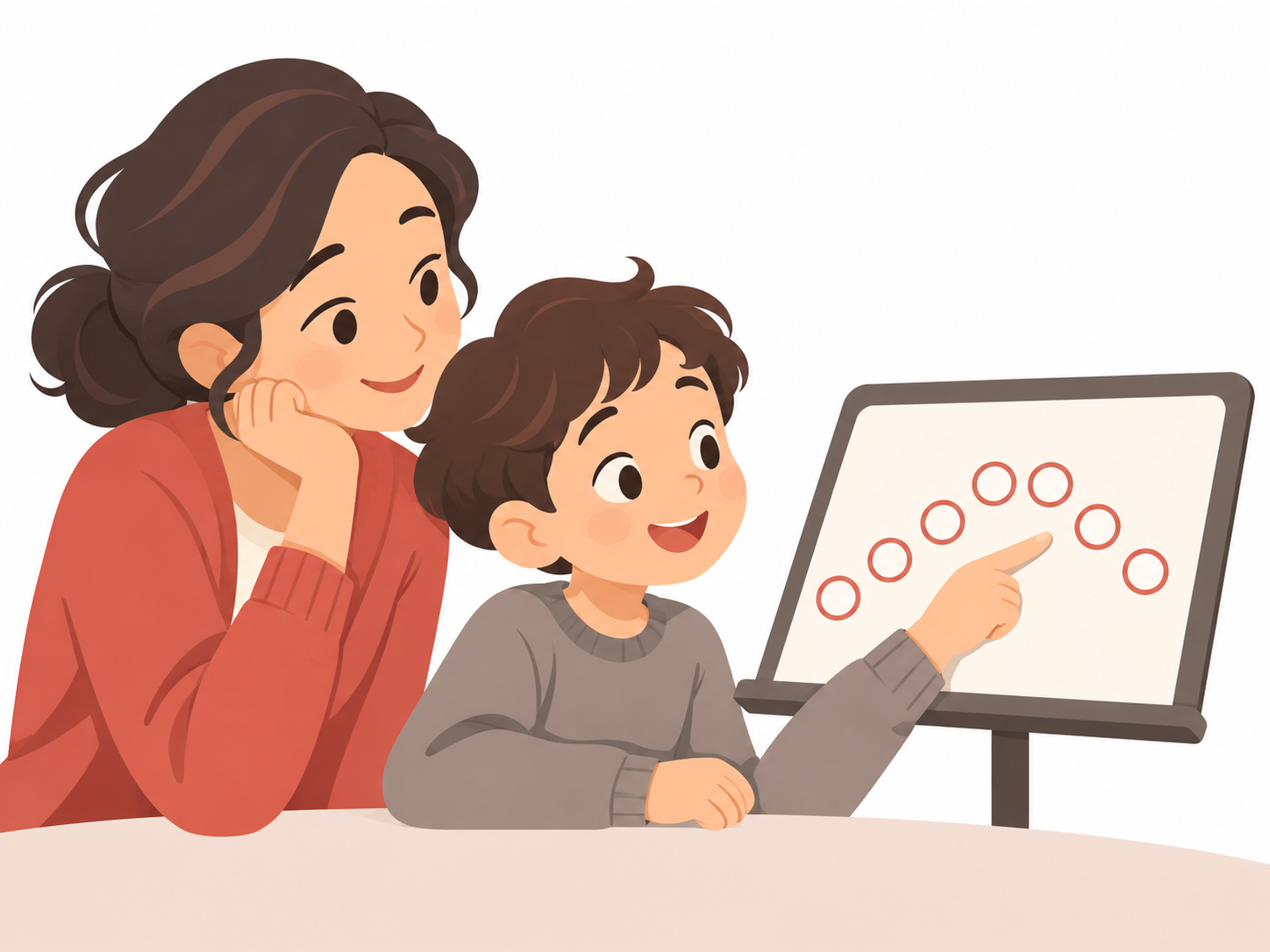
If your child plays higher when the music moves lower, or moves to the left when the notes rise, the problem is usually not carelessness. A beginner is translating several ideas at once: what the notes do on the page, where sounds live on the keyboard, which hand is playing, and which finger moves next.
Start with a tiny pattern of two or three notes. Ask your child to describe the direction before touching the keys: same, up, or down. Then point, place, and play only that short pattern. The goal is to make one direction clear—not to correct the whole song in one sitting.
Why note direction can feel confusing to beginners
Written music and a piano keyboard organize direction in different ways. On the page, higher notes appear higher. At the keyboard, higher sounds are found by moving to the right. Lower notes appear lower on the page and sound lower as the hand moves to the left.
An experienced player connects those ideas automatically. A beginner may understand each one separately and still lose the connection when rhythm, fingering, and two hands are added.
- The starting note is uncertain. A correct movement from the wrong starting key still produces the wrong notes.
- The child reads one symbol at a time. They may not notice whether the next note repeats, rises, or falls.
- Right and left compete with up and down. The child hears “go up” but thinks about a hand or finger instead of pitch.
- The section is too large. A full line can hide the two-note direction change that needs attention.
- The rhythm is consuming attention. When counting feels difficult, the hand may guess where to move.
- The fingering changes each time. A different finger can make the same movement feel like a new problem.
This is one reason useful beginner lessons build keyboard geography, rhythm, reading, and coordination in manageable steps. iPianoLab’s guide to how piano lesson levels work explains how those skills can grow together.
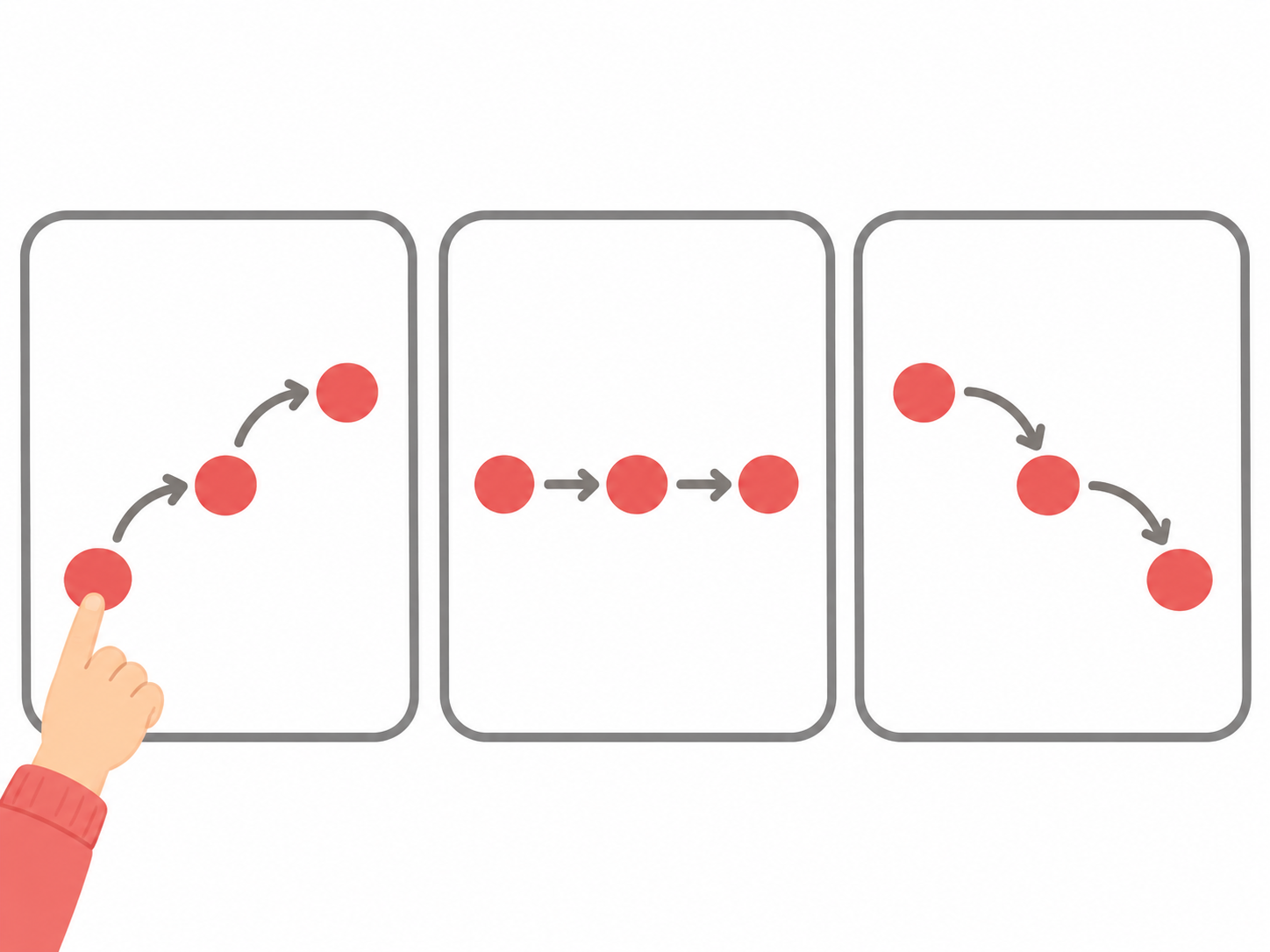
A five-minute “say, point, place, play” routine
Use one short pattern from the assigned music. Keep the teacher’s notes and fingering. This routine helps the child understand the movement; it does not replace the lesson assignment.
- Say the direction. Ask what happens from the first note to the second: same, up, or down. If there are three notes, describe one move at a time.
- Point on the page. Let your child trace the note heads without playing. The second note may be higher, lower, or at the same height.
- Place the starting note. Find the correct key and finger before counting in. Do not let a guessed starting place turn into a direction problem.
- Play only the tiny pattern. Stop after two or three notes. Ask whether the sound moved the way the child predicted.
- Reconnect one small piece. Add one note before or after the pattern, then try the short phrase once. If the direction becomes unclear again, shrink the section.
Two careful repetitions are usually more informative than many rushed attempts. If your child keeps landing on incorrect keys for several different reasons, use the related guide on why children play wrong piano notes.
What the mistake may be telling you
| What you notice | Possible bottleneck | Small next step |
|---|---|---|
| The pattern is correct but starts on the wrong key | Starting-position uncertainty | Find and silently touch the first note before playing |
| Every note moves in the opposite direction | Page-to-keyboard translation | Say “higher means right, lower means left,” then test two notes |
| Repeated notes turn into steps | The child expects every symbol to mean movement | Point to “same” before replaying the key |
| Direction is clear until both hands join | Coordination load | Check each hand’s job separately, then combine one beat |
| The correct move disappears at speed | Planning time | Pause before the move, prepare it, then restore a gentle pulse |
What parents can say without becoming the piano teacher
Use questions that help your child notice the pattern instead of supplying every note.
- “Does the next note stay the same, move up, or move down?”
- “Show me the first note before you play.”
- “Which way should the sound move?”
- “Can you point to the two notes that change direction?”
- “What did your teacher ask you to notice here?”
Avoid giving a string of note names while the child follows your voice. That may fix one attempt without helping the child read the next pattern independently. If you do not play piano yourself, the guide to helping a child learn piano when a parent does not play offers a simple support routine.
When should you ask the piano teacher?
Bring the exact measure or pattern when the same direction mistake continues across several short sessions, the starting place remains unclear, the child cannot tell whether the notes rise or fall, or the hand becomes tense or uncomfortable.
A useful observation is specific: “The child can point out that the notes move down, but the hand still moves right,” or, “The two-note pattern works alone but reverses when the left hand joins.” That gives the teacher something concrete to demonstrate or simplify.
Stop and tell the teacher if your child reports pain, tingling, or unusual discomfort. More repetitions are not the right response to pain.
How this skill supports independent piano playing
Recognizing direction helps a child do more than avoid wrong notes. It supports finding a starting place, reading short patterns, moving between keyboard positions, hearing whether a melody rises or falls, and correcting a mistake without waiting for an adult to name every key.
iPianoLab helps beginners play songs they enjoy while building keyboard geography, rhythm, counting, note reading, melody, chords, two-hand coordination, and music literacy over time. After-school classes commonly meet once weekly for one hour, with keyboards, headphones, books, music, and learning materials provided for the class session. The current iPianoLab FAQ explains the class structure and at-home learning support.
Looking for a beginner piano path with clear weekly steps? Find an iPianoLab school class.
Frequently asked questions
Should my child memorize whether notes go left or right?
Use the relationship as a practical cue: higher sounds are to the right, and lower sounds are to the left. But keep connecting that cue to what the child sees and hears. The goal is not a slogan by itself; it is a reliable page-to-keyboard connection.
What if my child knows the direction but still plays the wrong note?
Check the starting note, fingering, size of the practice section, and tempo. Direction is only one part of the movement. The teacher may need to clarify the exact position or make the assignment smaller.
Should I write arrows over the music?
A temporary arrow may help with one confusing spot if the teacher agrees, but avoid covering the page with permanent cues. Ask your child to describe the motion first, then fade the extra marking when the pattern becomes clear.
Does confusing up and down mean my child is not ready for piano?
No. It usually means the child is still connecting visual, listening, and movement skills. Use a smaller pattern and watch whether understanding improves with clear repetition.
Can my child practice direction away from the keyboard?
Yes. Point to two or three blank markers that rise, repeat, or fall and ask the child to name the motion. Then return to the instrument so the visual idea becomes a sound and movement.