First Piano Lesson Checklist for Parents: What to Bring and Expect
A child’s first piano lesson should feel like a beginning, not a test. Most new students do not need to arrive reading music, playing a song, or knowing where every note lives. A little practical preparation is enough to help the teacher start well and help your child feel comfortable.
This checklist covers what to confirm before the lesson, what to bring, how to set expectations, and what to notice afterward. Keep it simple: the goal of lesson one is to begin a useful learning routine.
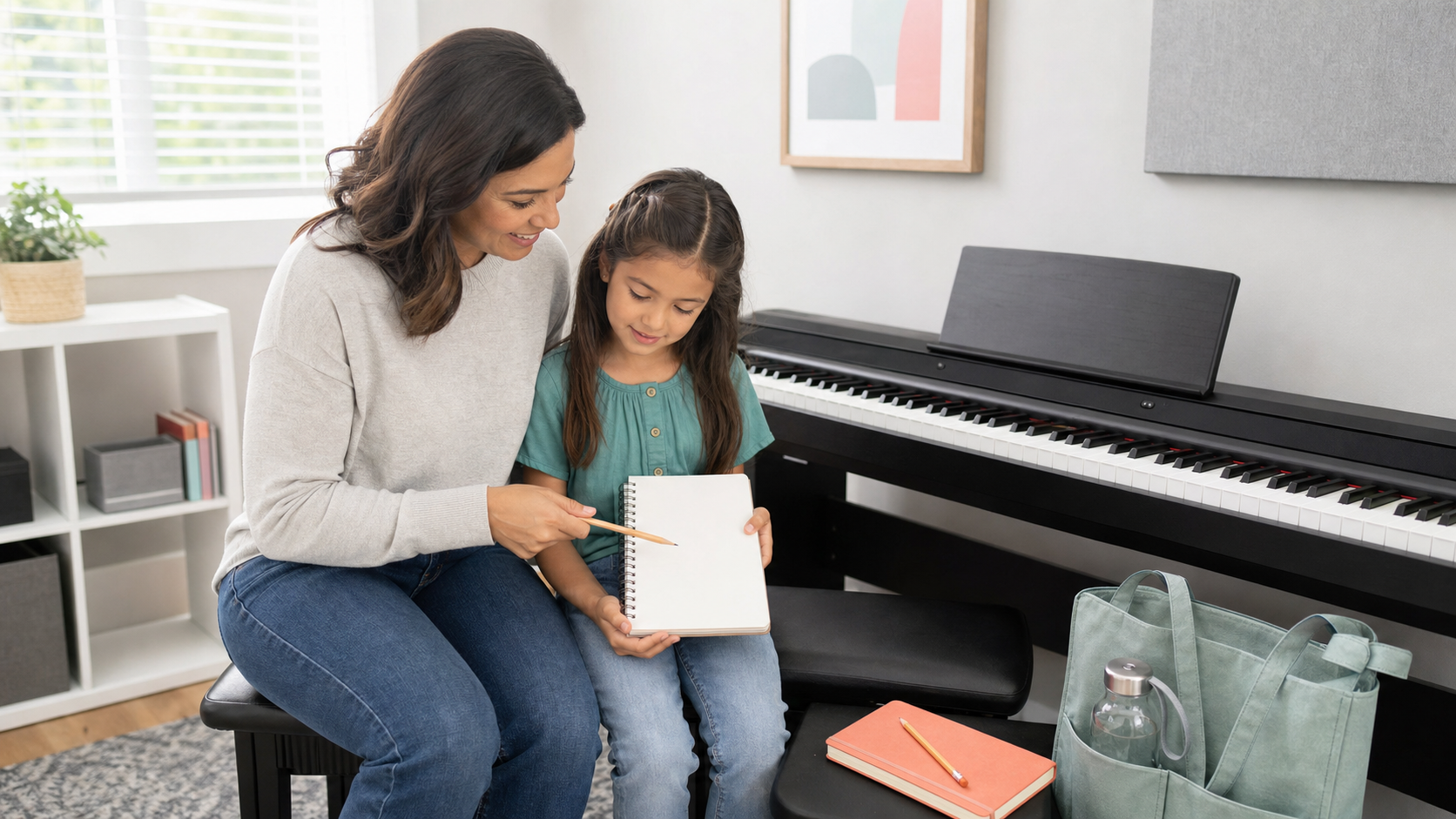
Quick First Piano Lesson Checklist
Before you leave home, confirm the details that matter for your specific lesson or class:
- The date, start time, and location or online login.
- Whether a parent should stay, observe, or return at pickup time.
- Whether the teacher or program provides a keyboard, headphones, book, music, or other materials.
- Whether your child should bring a notebook, pencil, water bottle, or any music already assigned.
- How early you should arrive so the child can settle in without rushing.
iPianoLab school-based classes provide the keyboards, headphones, books, music, and learning materials used in class. Families are encouraged to have a keyboard at home for practice. If you are attending a different lesson format, ask that teacher what is provided rather than assuming the setup is the same.
Start the iPianoLab signup path if your child is ready for a beginner-friendly first step.
What Should a Child Bring to the First Piano Lesson?
The safest answer is: bring only what the teacher or program requests. Carrying extra books and supplies will not make a beginner more prepared. For many lessons, a small notebook, pencil, and water bottle are enough.
If the teacher sent music, a book, or a welcome sheet in advance, bring the exact item requested. If the lesson is online, test the device, audio, camera angle, and internet connection before the start time. Position the camera so the teacher can see the student and enough of the keyboard to give useful feedback.
Children do not need to bring proof that they can already play. The first lesson is where the teacher begins learning how the child listens, follows directions, coordinates movement, responds to rhythm, and handles a new challenge.
What Should Parents Tell the Teacher?
A short, practical introduction is more useful than a long history. Share information that can help the teacher choose a good first activity:
- Whether your child has taken music lessons before.
- Any songs or musical styles your child already enjoys.
- Whether your child learns best by watching, listening, moving, or repeating.
- Any schedule or attention consideration that affects the lesson routine.
- What your family hopes the child can enjoy or do through piano.
You do not need to promise a long practice schedule on day one. Ask the teacher what a realistic first-week assignment looks like, then build the home routine around that specific instruction.
How to Prepare a Child Without Adding Pressure
Describe the lesson as a place to learn, not a performance. A useful message is: “You will meet the teacher, explore the piano, and try a few musical steps.” Avoid telling the child they must impress the teacher or play perfectly.
Before the lesson, you can listen to a favorite song together, clap a steady beat for a few seconds, or ask what sounds the child notices. Stop while it is still fun. You are helping music feel familiar, not teaching the lesson in advance.
If your child is nervous, explain what will happen in plain language: arrive, meet the teacher, sit at the instrument, listen, try, and ask questions. Predictability often does more for confidence than extra practice.
Should Parents Sit In on the First Lesson?
Follow the teacher or program’s policy. Some children settle faster with a parent nearby. Others focus better when the teacher can establish the routine directly. If observing is allowed, stay quiet enough for the teacher and child to build their own working rhythm.
Afterward, ask the teacher for the main home instruction instead of correcting every detail you noticed. The companion guide Should Parents Sit In on Piano Lessons? explains when observation tends to help and when giving a child more space may work better.
What Happens in a Beginner Piano Lesson?
Every teacher has a different sequence, but a first lesson often includes listening, finding areas of the keyboard, copying a short rhythm or pattern, learning how to begin and stop together, and trying a small musical idea. The child may use one finger, one hand, a simple melody, or an easy song depending on readiness.
At iPianoLab, beginning students play approachable songs early while building keyboard geography, rhythm, counting, note reading, two-hand coordination, melody, chords, and music literacy over time. Early musical success gives the fundamentals a clear purpose.
Families can compare the available paths:
- Explore after-school piano classes for a weekly teacher-guided group routine.
- Explore online piano learning for flexible home access to lessons and tutorials.
- Choose a beginner lesson path when your family is ready to start.
What to Ask at the End of the Lesson
Leave with one clear home plan. Ask:
- What should my child repeat before the next lesson?
- How often and for how long should we practice this week?
- What does “finished” look or sound like for this assignment?
- Should a parent help, observe, or let the child try independently?
- What should we bring next time?
Write the answers down before the details blur together. A short, specific assignment is easier to follow than a vague instruction to “practice more.”
How to Tell Whether the First Lesson Went Well
A successful first lesson does not require a polished song. Look for smaller signs: your child can explain one new idea, repeat a short pattern, identify where to begin, or describe what to do before the next lesson. Curiosity and willingness to return are useful early signals.
If your child seems unsure, ask about the activity rather than demanding a verdict. “What did you try?” or “What will you do next time?” usually gives you better information than “Did you like it?”
For a longer view, read How Long Does It Take a Child to Learn Piano? and How Often Should Kids Take Piano Lessons?.
First Piano Lesson FAQ
Does my child need a keyboard before the first lesson?
Confirm what the program provides during lessons. A home keyboard is useful for repeating assignments between lessons, but families should choose an instrument based on their current learning needs and space. The 61-key vs. 88-key keyboard guide can help with that decision.
Should my child practice before lesson one?
No pre-teaching is required unless the teacher sent a specific activity. Listening, clapping a beat, and talking positively about learning are enough.
What if my child makes mistakes?
Mistakes are expected. The useful skill is learning how to listen, adjust, and try again. A beginner lesson should make that process feel normal.
What if my child is shy?
Tell the teacher briefly, arrive with enough time to settle, and avoid answering every question for the child. A predictable routine and one simple success can help the relationship begin.
Start With a Clear First Step
Prepare the logistics, lower the pressure, and leave the first lesson with one clear home assignment. That is enough to turn lesson one into the beginning of a routine.
Start your child’s iPianoLab path, compare after-school classes, or explore online piano learning.