Why Does My Child Mix Up Treble and Bass Clef?
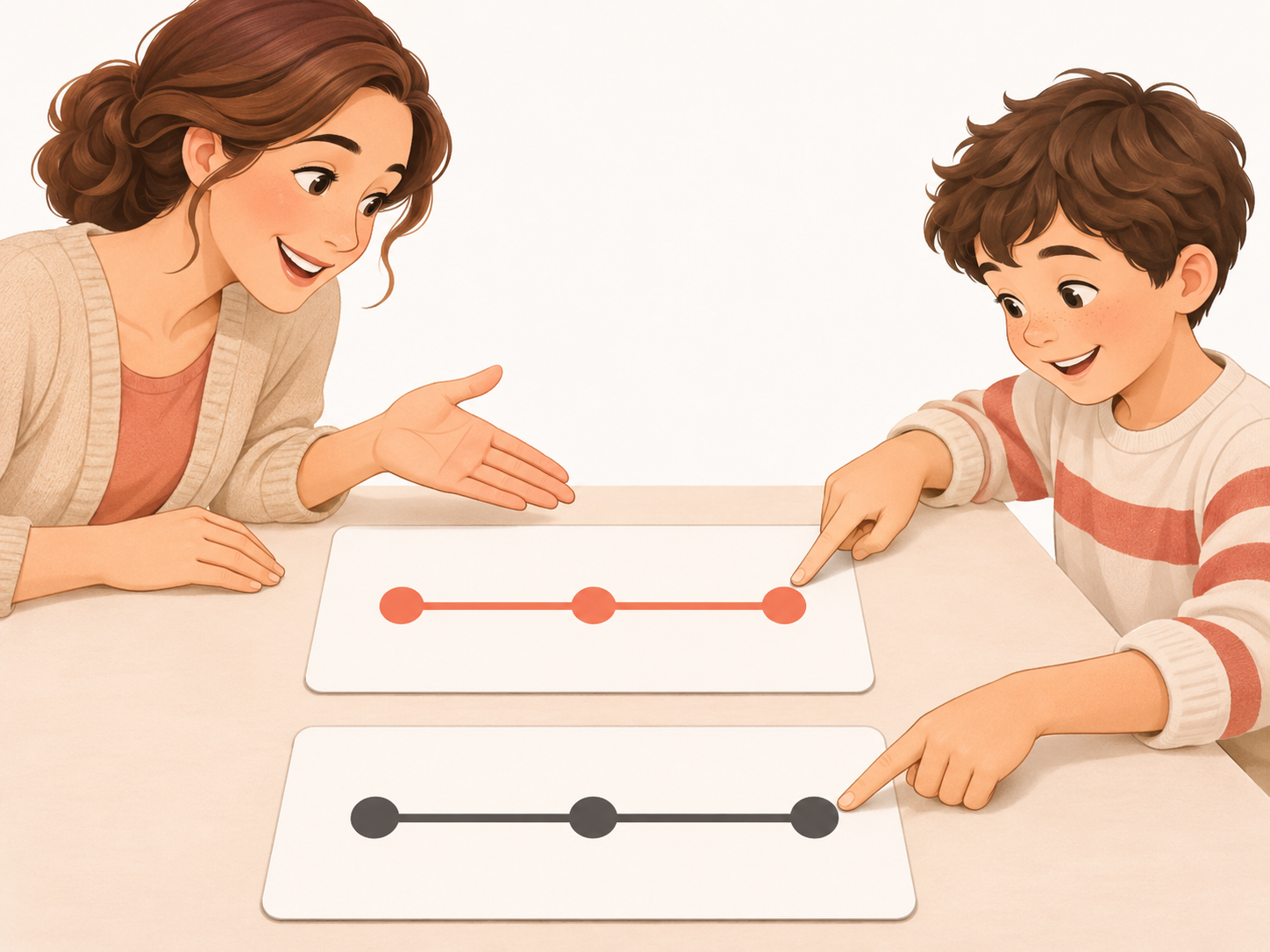
If your child reads one note correctly on the upper staff and gives the same note name to a similar-looking note on the lower staff, the problem is not carelessness. Treble and bass clef use the same five-line shape, but each clef gives those lines and spaces a different set of note names.
Beginners are also trying to keep a beat, choose fingers, find keys, and follow the page. When all of those jobs compete for attention, the clef can become an easy detail to skip. A short look–name–place routine can make the clef part of the setup instead of an afterthought.
What changes when the clef changes?
A clef tells the reader how the notes on a staff are named. A note in the same visual position will not necessarily have the same letter name in treble clef and bass clef. That is why a child who recognizes the shape of a note but overlooks the clef may confidently choose the wrong key.
In beginner piano music, treble clef often appears on the upper staff and bass clef often appears on the lower staff. Treble is commonly associated with the right hand and bass with the left hand, but that is only a helpful early pattern—not an absolute rule. Either hand can play notes written in either clef, and the teacher’s fingering and hand-position instructions still matter.
Why children confuse the two clefs
- The staffs look almost identical. Both have five lines and four spaces, so the clef sign must do important work.
- Children may read position before context. They see “a note on a line” and guess the familiar name without checking which clef defines it.
- Hand shortcuts can become rigid. “Treble equals right hand” and “bass equals left hand” may help at first, but the shortcut does not explain the note names.
- The page contains too much at once. A whole grand staff can feel like one large picture instead of two separate reading zones.
- Corrections arrive after playing starts. Once the hand has moved, the child may focus on fixing the key instead of noticing the missed clef check.
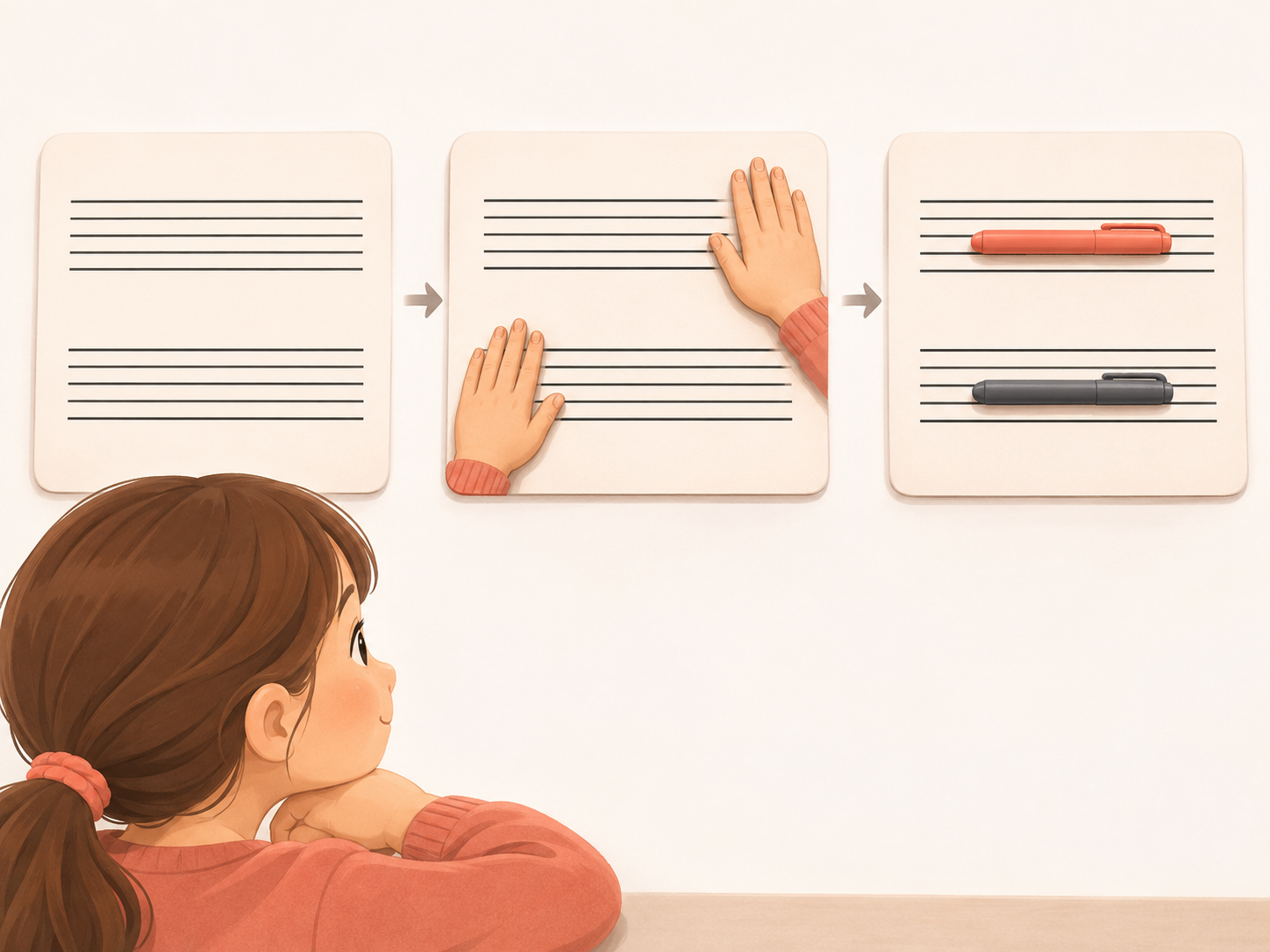
A five-minute clef reset
Use one short measure from the assigned music. Keep the teacher’s written fingering and hand position unchanged.
- Cover the notes for a moment. Leave the clef visible and ask, “Which clef starts this staff?” Let your child answer before uncovering the notes.
- Name the reading zone. Say “upper staff” or “lower staff.” If the teacher uses a hand cue, add it only after the clef is identified.
- Find one known anchor. Use the specific reference note the teacher has taught. Point to it on the page, say its name, and locate its key once.
- Read two or three notes from the anchor. Notice whether the next note repeats, steps, or skips. Do not name the entire line.
- Play the tiny group and reset. Stop after the short pattern, look at the clef again, and repeat only if the child stays relaxed and understands the next step.
The goal is not to quiz every line and space. It is to build a reliable sequence: check the clef, find one secure note, then read the nearby pattern.
Use this quick diagnostic
| What you notice | What may be happening | Helpful next step |
|---|---|---|
| The child gives the same note name to matching positions on both staffs | The clef is being skipped | Hide the notes briefly and identify the clef first |
| Upper-staff notes are easier than lower-staff notes | One clef has a stronger anchor | Use one teacher-approved bass-clef anchor and two nearby notes |
| The clef is correct before playing but forgotten mid-line | The reading section is too large | Use one measure and reset at the next clear starting point |
| The child knows “right hand” and “left hand” but not note names | A hand shortcut has replaced reading | Name the clef and anchor note before adding the hand cue |
| The child switches hands or fingering to fix a wrong note | Reading and movement are being corrected together | Stop, restore the teacher’s setup, and solve the page first |
What parents can say
Use questions that direct attention without supplying every answer: “Which clef are you reading?” “What is your anchor note?” “Does the next note repeat, step, or skip?” Then wait long enough for your child to look.
Avoid saying only, “That is the wrong note.” The child needs to know where the wrong choice began. A more useful prompt is, “Check the clef before you choose the key.”
What not to do
- Do not write every note name on the page. Too many labels can become a substitute for reading.
- Do not teach a new mnemonic that conflicts with the teacher’s method. Ask which anchor notes and language the class uses.
- Do not assume upper always means right hand. Follow the actual hand and fingering instructions in the music.
- Do not drill both clefs for a long session. One short pattern in one clef can be enough for today.
- Do not continue through eye strain, pain, or strong frustration. Pause and bring the specific difficulty to the teacher.
When the teacher should take the lead
Ask the teacher for help when your child has no secure reference note in one clef, repeatedly switches note names between staffs, cannot tell which hand position belongs to the assignment, or becomes tense while trying to decode the page. Bring one exact measure so the teacher can separate a clef-reading problem from a fingering, visual-tracking, or keyboard-location problem.
If your child loses the place after looking down, use the separate iPianoLab guide for finding and keeping a place in piano music. If the note name is known but the wrong key is played, the guide to repeated wrong notes helps identify whether the issue is starting position, movement, fingering, or task size.
A simple next step
Choose one clef and one measure today. Identify the clef, find the teacher-approved anchor note, and read only the next two or three notes. End after one clear, comfortable success.
iPianoLab introduces note reading alongside songs, rhythm, keyboard geography, and coordination in manageable stages. Looking for a beginner piano path with clear weekly steps? Find an iPianoLab school class.